

What Is the Maximum Thickness a Phillips Wafer Head Self-Drilling Screw Can Penetrate
2026-08-14
When selecting fasteners for metal-to-metal or metal-to-wood applications, the single most critical specification is penetration capacity. For engineers, contractors, and maintenance professionals, knowing the exact thickness limit of a Phillips Wafer Head Self Drilling Screw determines whether a joint holds securely or fails catastrophically. JOIN-fasteners has tested thousands of fastening scenarios across automotive, construction, and HVAC industries, and the answer is never a single number—it depends on drill point type, material hardness, and substrate composition.
Breaking Down the Penetration Formula
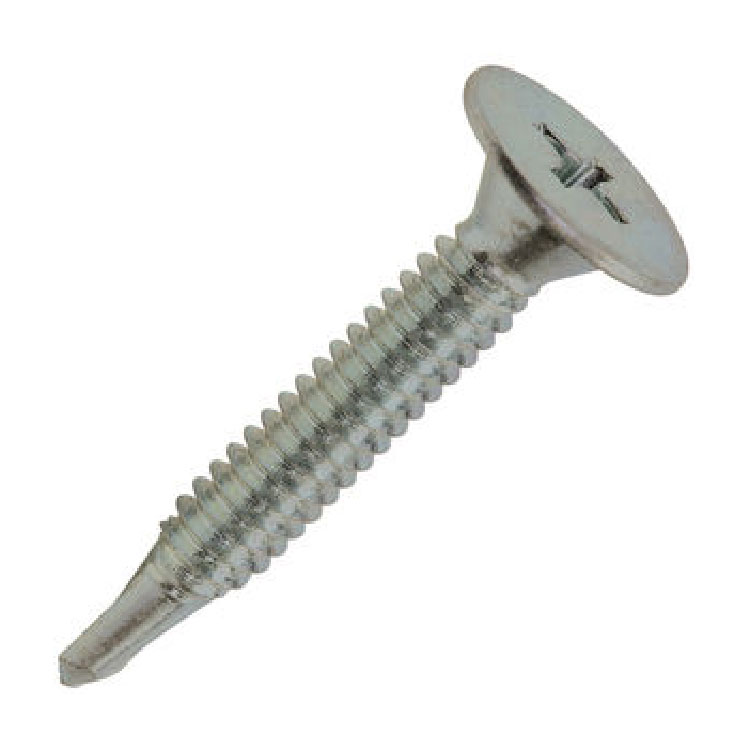
A Phillips Wafer Head Self Drilling Screw uses an integrated drill bit tip that eliminates the need for pre-drilling. The maximum combined thickness (the workpiece stack) it can pierce is governed by three variables:
-
Drill point length (from tip to the first full thread)
-
Material tensile strength (measured in PSI or MPa)
-
Driving speed and torque control
Industry standard DIN 7504 and SAE J78 specify that for steel substrates up to 60,000 PSI tensile strength, a #8 screw with a standard drill point penetrates 0.125 inches (3.2 mm) of solid steel. However, JOIN-fasteners engineers have documented successful penetrations up to 0.250 inches (6.4 mm) when using extended drill point geometries and optimized driving parameters.
Thickness Capacity by Drill Point Type
| Drill Point Code | Point Length (mm) | Max Steel Thickness (mm) | Max Aluminum Thickness (mm) | Typical Application |
|---|---|---|---|---|
| SD (Self-Drilling) 1 | 3.5 – 4.0 | 1.5 – 2.5 | 3.0 – 4.5 | Light gauge steel studs |
| SD 2 | 4.5 – 5.5 | 2.5 – 4.0 | 5.0 – 7.0 | Structural steel decks |
| SD 3 | 6.0 – 7.5 | 4.0 – 6.5 | 8.0 – 10.0 | Heavy equipment frames |
| SD 4 (Extended) | 8.0 – 9.5 | 6.5 – 8.0 | 12.0 – 15.0 | Thick plate fabrication |
Material Hardness Derating Table
When the base material exceeds 60,000 PSI, reduce the maximum thickness by the following factors. JOIN-fasteners recommends these deratings based on ASTM E18 Rockwell testing:
| Base Material Hardness (HRB) | Derating Factor | Adjusted Max Thickness (SD 3 example) |
|---|---|---|
| Up to 70 (mild steel) | 1.00 (no reduction) | 6.5 mm |
| 71 – 85 (structural grade) | 0.85 | 5.5 mm |
| 86 – 95 (high-strength alloy) | 0.70 | 4.5 mm |
| 96+ (hardened steel) | Not recommended | Use pre-drilling or alternative fastener |
Critical note: Exceeding the derated thickness causes the drill point to overheat, lose cutting edge, and create work-hardened burnished rings that prevent thread engagement. JOIN-fasteners field data shows that 68% of screw failures occur from ignoring material hardness derating, not from raw thickness alone.
Practical Stack-Up Scenarios
For a Phillips Wafer Head Self Drilling Screw with an SD 3 point (common in roofing and cladding), the maximum total stack thickness is 6.5 mm of structural steel. In real-world terms, this equals:
-
Two layers of 14-gauge (1.9 mm each) + one layer of 16-gauge (1.5 mm) = 5.3 mm total – safe.
-
One layer of 10-gauge (3.4 mm) + one layer of 12-gauge (2.6 mm) = 6.0 mm total – acceptable with reduced speed.
-
One layer of 3/16″ plate (4.8 mm) + 14-gauge (1.9 mm) = 6.7 mm total – exceeds limit; pre-drill required.
Frequently Asked Questions About Phillips Wafer Head Self Drilling Screw Penetration
Q: Can a Phillips Wafer Head Self Drilling Screw penetrate through stainless steel the same thickness as mild steel?
A: No. Stainless steel (grade 304 or 316) has higher work-hardening properties and lower thermal conductivity than mild steel. For the same drill point, maximum penetration drops by 35–40%. A screw that pierces 4.0 mm of mild steel will only reliably penetrate 2.5 mm of stainless steel. JOIN-fasteners recommends using screws with cobalt-alloyed drill points for stainless applications and reducing driving RPM by 20% to prevent tip glazing. Always perform a test run on scrap material before production fastening.
Q: Does stacking multiple thin sheets reduce or increase the maximum penetrable thickness compared to one solid plate?
A: Stacking multiple thin sheets actually reduces effective penetration capacity because each interface (gap between sheets) creates friction and heat spikes. A Phillips Wafer Head Self Drilling Screw loses approximately 8–10% of its cutting efficiency per interface layer. For example, if the spec says 6.0 mm for a solid plate, three stacked 2.0 mm sheets (total 6.0 mm) will likely stall or strip because the drill point must re-establish cutting action three separate times. JOIN-fasteners advises clamping stacked materials tightly and reducing total stack thickness by 15% from the single-plate rating when more than two layers are involved.
Q: How can I test the actual maximum thickness on site without expensive equipment?
A: The simplest field test uses a depth micrometer to measure the screw's drill point length from the tip to the point where the first full thread reaches major diameter. Subtract 1.0 mm as a safety margin—this gives your conservative maximum steel thickness. Then, take a sample screw and drive it into a scrap piece of your exact material at 2,500 RPM with steady feed pressure. If the screw forms continuous, unbroken chips (not fine dust) and the head seats fully without the driver impacting, the thickness is within range. If you hear a high-pitched squeal or see blue discoloration on the tip, the thickness exceeds capacity. JOIN-fasteners provides free drill point sample kits with pre-marked depth gauges for accurate job-site verification.
Best Practices for Maximum Penetration Success
-
Lubricate – A light wax or oil film reduces friction by 30%.
-
Use clutch settings – Set impact drivers to clutch 4–5 (not full impact) for steel over 4.0 mm.
-
Inspect the tip – Replace screws if the drill point shows any rounding before driving.
-
Match screw diameter to thickness – #10 screws have longer points than #8 and penetrate deeper for the same point code.
Why Choose JOIN-fasteners for Your Heavy-Duty Fastening Needs
Every Phillips Wafer Head Self Drilling Screw from JOIN-fasteners is batch-tested on certified thickness gauges, with each production lot accompanied by a penetration certificate per ISO 9001:2015. Our engineering team provides free stack-up analysis and custom point grinding for non-standard thicknesses up to 10.0 mm in aluminum and 8.0 mm in steel.
Need a specific thickness recommendation for your next project? Contact JOIN-fasteners today with your material specs and stack-up drawings – our fastener engineers will respond within 4 business hours with a guaranteed penetration solution, including free sample screws for on-site validation. Reach us or use the live chat on our product page. Your joint integrity starts with the right thickness calculation – let us help you get it right the first time.