

UL FM Gate Valve Manufacturer You Can Trust for Fire Protection Systems
2026-09-23
Every fire protection system depends on valves that open instantly and close tightly—no room for error. Finding a UL FM gate valve manufacturer you can trust is more than a checkbox; it's the foundation of a system that has to work the first time, every time. At DRIFCO, we don't just meet UL and FM standards; we build gate valves that hold up under real-world fire conditions. Curious what separates a reliable valve from a risky one? This guide breaks down the key factors specifiers and contractors should evaluate before making a choice.
Why UL and FM Certifications Alone Don’t Make a Gate Valve Trustworthy
UL and FM certifications signal that a gate valve has passed specific lab tests under controlled conditions. But those benchmarks rarely capture how the valve behaves after years of throttling, sediment buildup, or sudden pressure spikes. A valve can earn its badge on day one, then lose sealing integrity once corrosion works into the stem packing or the wedge seat accumulates mineral scale from real-world water chemistry.
Field performance hinges on details that certification checklists overlook: the thread depth on the bonnet bolts, the finish inside the valve body, or whether the handwheel was sized for an operator in freezing weather. A certified valve with rough internal casting can still trap debris and jam mid-stroke. And if the local water supply carries abrasive particles, a standard rubber wedge may erode long before the next scheduled inspection—no matter what third-party stamp it carries.
Trustworthiness also comes from installation and upkeep. A UL-listed valve torqued improperly onto mismatched flanges will leak at the joint, while a FM-approved unit left unexercised for years may seize in the open position. Users who rely solely on certification papers often skip the routine stroking and stem lubrication that keep a gate valve reliable. The label tells you it met a minimum bar in a lab; it doesn't tell you whether that same valve will close drip-tight after a decade in your own pipeline.
What a Manufacturer’s Casting Process Reveals About Fire System Longevity
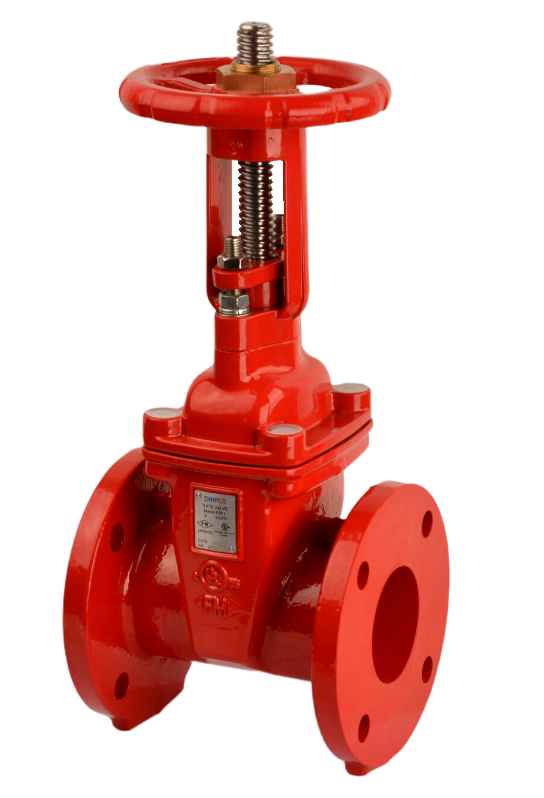
Look closely at a fire pump casing and you can read its future. The way molten metal flows, cools, and solidifies during casting directly shapes internal soundness. Tiny pores, shrinkage cavities, or inclusions may be invisible to the naked eye, yet under years of pressure cycling they slowly grow into cracks. A system that sits idle for months then suddenly runs at full load will amplify these hidden flaws, turning a minor casting defect into a sudden leak or rupture.
Experienced manufacturers control pour temperature, cooling rate, and mold design to achieve a fine, uniform grain structure with minimal locked-in stress. They pair this with X-ray or ultrasonic inspection to reject parts with internal discontinuities. That rigor translates into longer fatigue life and fewer surprise failures—exactly what fire protection demands, since the equipment must remain dormant for long stretches and still perform flawlessly when called upon.
Material choice and post-casting heat treatment are equally revealing. A correctly poured and annealed ductile iron valve, for instance, resists corrosion and dezincification in oxygenated, slightly chlorinated fire water much better than a poorly cast alternative. Smoother internal surfaces from precise casting also reduce scale buildup and microbial corrosion. These details determine whether a riser manifold or alarm check valve still holds tight after decades in a damp mechanical room.
The Difference Between a Gate Valve That Passes Tests and One That Protects Buildings
Many gate valves leave the factory with a clean hydrostatic report and a seat test that shows zero leakage, but passing a bench test says little about how the valve will behave when a building's standpipe sees 175 psi during an actual fire. The test itself is brief, static, and usually run at room temperature. It does not account for casting porosity that opens up under thermal expansion, a stem packing that dries out after five years behind a hallway access panel, or a wedge guide that binds once the first slug of sediment from an old main hits it. A valve that genuinely protects a building is built with trim that tolerates that sediment, has no cheap EPDM parts that swell in wet pipe systems, and uses castings with enough wall thickness beyond the minimum to survive corrosion without pinhole leaks.
The deeper difference is accountability after installation. A test-passing valve often arrives with a generic certificate but no way to trace the disc metallurgy, the pressure-boundary bolts, or the exact heat number of the body casting. The protective valve ships with all of that documentation, plus an external stem seal that can be repacked while the line stays under pressure, and a handwheel sized so a firefighter wearing gloves can close it without reaching for a cheater bar. It is not about passing a test one afternoon in a plant. It is about being mounted on a riser, forgotten for twenty years, and still closing on the first try when the alarm rings.
How Field Installers Spot a Valve Built for Inspection Rather Than Performance
Field installers rarely trust a valve that arrives looking too pretty. A thick coat of paint over rough castings, mirror-polished handwheels, and a binder full of test certificates often signal that the manufacturer spent more time on the sales photo than on the flow path. One installer we spoke with taps the body with a wrench and listens—if it rings like a bell, the metal is thin in places you cannot see. If it thuds dead, there is filler under the paint.
Another giveaway is the stem and seat geometry. A valve built for inspection will have a shiny stem but a sloppy thread fit, so the handwheel turns easily on the bench yet binds under line pressure. Installers check the backseat and the wedge guide by feel before the valve ever goes in the rack. If the wedge drops with a clunk instead of sliding, or if the packing gland has no room for adjustment, they know the test bench was the only place that valve ever performed.
Finally, watch the install crew’s habits. If they replace the factory bolts before hanging the valve, or if they lap the seats on a brand-new unit without being asked, that is not extra caution—it is experience. A valve designed for real service needs no such apologies. It ships with a machined flange face, a stem that does not flex under a torque wrench, and a nameplate that actually matches the casting marks. The paperwork is nice, but it never held back a slug of wet steam at 3 a.m.
A Behind-the-Scenes Look at Leak Testing and Manual Torque Checks
Leak testing isn't glamorous, but it's the quiet gatekeeper between a sealed assembly and a field failure. Operators run pressure decay or mass flow tests, watching for tiny drops that indicate a gasket isn't seated or a fitting has a hairline crack. What most people don't see is the setup: calibrating the instrument against a known leak standard, compensating for shop air that warms throughout the day, and chasing false failures caused by worn O-rings in the fixture rather than the part itself.
Manual torque checks are just as easy to underestimate. A click-type wrench gives a false sense of control if the operator doesn't account for dynamic versus static torque, or if fastener lubrication wasn't consistent. On the floor, experienced technicians don't simply pull to the spec; they feel for a smooth ramp-up, watch for joint relaxation, and know when a reading is odd enough to warrant a second pass with a calibrated digital transducer.
Together, these two checks catch problems that automated systems miss. A leak test can pass after a seal is over-compressed, while a torque audit reveals someone used an impact gun instead of a hand wrench. That kind of behind-the-scenes cross-checking rarely makes it into a work instruction, but it's what separates a line that ships parts from one that ships confidence.
When Confidence in a Fire Protection Valve Comes from Repeat Installations
In fire protection, trust in a valve rarely comes from a brochure. It comes from the quiet repetition of seeing the same model installed across dozens of buildings, each time passing hydrostatic tests, each time responding during routine flow checks. When a contractor has handled a particular valve in warehouses, schools, and high-rises without a single callback for leakage or failure to open, that pattern becomes more convincing than any specification sheet.
Repeat installations also expose a valve to the messy realities of field conditions—varying water quality, fluctuating pressures, and less-than-perfect pipe alignment. A valve that survives those variables without complaint develops a reputation among installers and inspectors. They learn its quirks, its handwheel torque, its reset procedure. That familiarity turns a generic component into a known quantity, and known quantities are what you want between a fire and a water supply.
For the engineer writing the next specification, that accumulated field history is hard to argue against. Picking a valve that has already proven itself in fifty similar installations means fewer surprises during commissioning and fewer worries during annual inspections. Confidence, in this line of work, is not an abstract feeling—it is the sum of every clean test and every silent, dependable stand-by that came before.
FAQ
UL and FM are independent testing bodies that verify valves meet strict safety and performance standards. A valve carrying both marks has passed fire tests, pressure cycling, and material checks, so it's proven to hold up when the system demands it.
Look for a manufacturer with a long track record in fire protection, not just a general valve supplier. Ask to see the UL/FM listings, request documentation on material traceability, and check if they offer on-site support or technical guidance for installation and maintenance.
You'll find them in wet and dry sprinkler systems, standpipe systems, fire pumps, and sometimes in deluge or pre-action systems. They are commonly used as control valves on main risers or as pump isolation valves because they allow full flow with minimal pressure loss.
Yes, but the specific model matters. Indoor installations often use standard epoxy-coated cast iron bodies, while outdoor or buried service requires valves with additional corrosion protection, such as fusion-bonded epoxy and stainless steel trim. Always confirm the valve's rated service conditions with the manufacturer.
Regular inspection is key: check for leaks around the stem, operate the valve through a full open-close cycle at least once a year, and lubricate the stem if recommended. In fire protection, valves that are never cycled can seize, so scheduled exercising is more important than for ordinary plumbing valves.
Most reputable manufacturers offer options such as flanged, grooved, or threaded ends, as well as post indicators, tamper switches, and gear operators for larger sizes. Custom tagging and special paint finishes are often available too, but lead times may increase, so plan accordingly.
The difference is in the details: thicker body walls, ductile iron or bronze internals instead of cheap brass, a non-rising stem design with a solid wedge, and a tighter packing system. Fire protection valves must open and close reliably after years of inactivity, which demands better manufacturing tolerance and material selection.
Having a valve with clear UL/FM marks and full documentation speeds up the approval process with authorities and insurance inspectors. It reduces the chance of rejection during hydrostatic testing and avoids arguments about whether the valve meets the required standard, saving both time and rework costs.
Conclusion
A UL and FM stamp on a gate valve is only the starting point, not a guarantee of performance. True trustworthiness comes from how a manufacturer casts the body and bonnet; a dense, uniform metal pour without hidden porosity is what keeps a fire protection system intact for decades, not just a few months of certification paperwork. The difference between a valve that passes a lab test and one that actually protects a building shows up in the details: thicker flanges, deeper stem packing, and a wedge that seats flush without needing excessive force. Certification proves a design was reviewed, but it does not prove every unit shipped will hold pressure when the heat is on.
Field installers quickly recognize whether a valve was built for inspection or for real performance. When they pick it up, they notice the weight, the smoothness of the handwheel, and whether the nut turns without binding. Behind the scenes, our leak testing involves more than a quick air dunk; every valve gets a manual torque check on the stem and a seat test at both high and low pressure to catch the leaks that automated lines miss. Confidence in a fire protection valve ultimately comes from repeat installations—when contractors keep asking for the same brand because they have never had to apologize to a building owner after a failed inspection. That is the trust we build by sweating the small stuff before a single drop of water ever flows.
Contact Us
Contact Person: George
Email: [email protected]
Tel/WhatsApp: 13863633883
Website: https://www.es-fire.com