

Top Ring Joint Gaskets Manufacturers in China Worth Knowing
2026-10-19
Ring joint gaskets don’t often make headlines—until a high-pressure flange joint starts leaking. Then they’re all anyone talks about. China has become a key source for these precision sealing components, but the gap between a reliable RTJ gasket and a costly failure often comes down to the manufacturer behind it. Sourcing teams who dig past the supplier directories keep circling back to a few names, and Kaxite is one of them. Below, we cut through the noise and highlight the Chinese ring joint gasket manufacturers worth knowing.
A Closer Look at China's Most Dependable RJG Producers
When sourcing RJG connectors from China, the difference between a supplier that merely fills orders and one that genuinely understands your production line is stark. The most dependable producers treat each batch as part of a longer relationship, not a one-off transaction. They tend to maintain in-house mold fabrication, which allows them to control tolerances down to fractions of a millimeter and respond quickly when a customer needs a subtle design tweak. You'll notice this in the way they handle pre-production samples: instead of just sending a few connectors in a bag, they provide dimensional reports, material certifications, and sometimes even a short video of the tooling running at speed. That level of transparency is rare, and it's what separates a partner from a middleman.
Another hallmark of China's most reliable RJG producers is their willingness to audit their own processes in front of you. Walk through their facility and you're likely to see automated optical inspection at the end of the line, not as a marketing gimmick but because they've burned before from a batch of 50,000 connectors with a single bent pin. They also tend to keep a small engineering team on-site, people who can discuss plating thickness, insert retention force, or why a particular resin choice works better for high-temperature reflow. Instead of pushing you toward whatever's cheapest, they'll map out the trade-offs: a phosphor bronze contact versus beryllium copper, gold flash versus 15 microinches of hard gold. That kind of practical, shop-floor knowledge is what makes them dependable over the long haul.
Finally, the best RJG producers in China have learned to treat communication as a key deliverable. They won't disappear for two weeks after you send a drawing; instead, they reply with a DFM report within days, flagging potential sink marks, thin walls, or insertion angle issues. Their English may not always be perfect, but their technical clarity is. Many of them have also started using shared cloud folders for real-time quality data, so you can log in at midnight your time and see the latest Cpk numbers from the current production run. This isn't about fancy dashboards or buzzwords—it's about removing the anxiety from an eight-thousand-mile supply chain. When a producer gives you that kind of daily visibility, you stop worrying about whether your order will arrive right and start focusing on what you're actually building.
Raw Materials and Metallurgy That Set These Shops Apart
The real difference starts long before shaping begins—it's in the raw stock. Instead of relying on commodity bar stock, these shops pull from a narrow list of mill runs known for tight chemical tolerances. You'll see a preference for clean, fine-grained steels like AEB-L or 52100, often sourced in small batches so each heat can be traced back to its original certification. Impurities that most buyers never notice get rejected here, because inclusions and uneven carbide distribution are what separate a workhorse from a wall hanger.
Heat treatment gets treated as a craft rather than a checkbox. Many of these shops run their own digitally controlled furnaces and adjust soak times, quench speeds, and temper cycles per blade geometry—not just per steel type. Cryogenic treatment is common, not as a gimmick, but to convert retained austenite and stabilize the edge. The result is a hardness curve that's consistent from spine to edge, which you can feel in how long a tool holds its sharpness under real use.
Metallurgy here also means honest pairing of steel to task. Instead of chasing a single super steel, these makers match carbon content, toughness, and corrosion resistance to what the tool actually does. A thin kitchen knife gets a different protocol than a heavy chopper, even if both start from similar alloy families. It's this refusal to cut corners on material provenance and thermal processing that gives the finished pieces their quiet, no-excuses performance.
Precision Machining: Where Tight Seals Begin
Tight seals don't start with gaskets or O-rings—they start at the spindle. A mating surface that drifts by even a few microns under load will eventually weep, no matter how soft the elastomer. Precision machining controls those microns from the first cut: bore roundness held to within half a thousandth, face flatness measured under a monochromatic light, and thread lead errors corrected before the tap ever touches metal. It's the difference between a seal that survives a thermal cycle and one that quietly gives up after three hundred hours.
Look closely at a properly machined gland and you'll see tool marks running in the direction of assembly, not across it. That's intentional. Spiral or radial lay patterns can guide leakage paths under pressure, while a controlled circumferential finish lets the seal lip slide without tearing. Material matters too—matching the thermal expansion of the housing and shaft prevents the seal groove from opening up at operating temperature. None of this shows up on a standard print. It lives in the setup notes, in the honing stone grit choice, in the decision to rough and then stress-relieve before the finish pass.
The best machine shops treat seal surfaces as functional geometry, not just dimensions. They'll chase a 0.4 Ra surface roughness not because the customer asked for it, but because they know a sub-micron finish means less initial wear on the seal lip and a longer bed-in period before micro-leakage begins. That kind of knowledge doesn't come from a CAM manual. It comes from watching oil seep past a supposedly finished flange at 3 a.m., then remeasuring every datum until the root cause stops hiding.
Quality Checks That Go Beyond Standard Certificates
Every shipment passes through a layered inspection process that starts long before the final audit. Our teams pull samples from active production runs rather than relying on pre-selected units, then cross-check them against the original material specs and dimensional tolerances. If a batch shows even minor drift in surface finish or torque resistance, it is held back until the cause is traced and corrected.
Beyond in-house checks, we send random lots to independent laboratories for composition analysis and fatigue testing. This gives a second opinion that is not tied to our own production targets. The results are logged with the batch number, so any future question can be answered with actual test data instead of assumptions.
We also watch the quieter details: thread depth, edge burrs, plating adhesion after thermal cycling, and packaging that protects the part in transit. These small checks rarely appear on a standard certificate, but they are exactly what prevent field failures and costly rework later.
Custom Configurations for Demanding Flange Connections
When off-the-shelf flanges fall short, custom configurations step in to handle the extremes that standard catalogs ignore. Think reactor vessels cycling between cryogenic and steam-clean temperatures, or subsea manifolds where a single leak means a multi-million dollar intervention. Here, material selection moves beyond 316 stainless — duplex, super duplex, Inconel, and titanium often become the baseline, while gasket seating surfaces get machined to tolerances tighter than ASME defaults.
Bolt patterns and hub geometry also shift from default tables. A crowded nozzle arrangement might call for a reduced bolt circle with higher-strength studs, or a raised face might need a serrated finish at 125–250 RMS to bite into a specific spiral-wound gasket. Even the flange bore gets attention: matching the exact pipe ID avoids turbulence, erosion, and crevice corrosion at the weld neck.
The real payoff shows up in fit-up and lifecycle cost. Instead of forcing a standard flange into a non-standard service, a custom design aligns thermal expansion rates, preload requirements, and access for torque wrenches. That means fewer leak paths, predictable gasket seating, and maintenance crews who aren't fighting a flange that was never meant for the job.
Shipping and Support: The Unseen Side of Chinese Suppliers
Most buyers obsess over unit price and forget that the real test begins once the wire transfer clears. Shipping from China rarely fails in dramatic fashion; it fails in a thousand small ways that quietly eat margin. A supplier might promise a twenty-day sail to Rotterdam, but the actual clock starts when the container is gated in at Yantian, not when the commercial invoice is stamped. Then there are the holidays you didn't track, the sudden blank sailing, the paperwork mismatch that holds your cargo at the port while demurrage fees tick upward. None of this shows up on a quotation sheet.
Support is even harder to evaluate before you have a problem. A sales rep who answers within minutes during negotiation may vanish once the deposit is paid, leaving you to chase updates through a rotating cast of assistants. The suppliers that genuinely stand out are the ones who send photos of the loading process without being asked, who flag a customs classification issue before it becomes a fine, and who treat a quality complaint as a shared problem instead of a personal insult. That kind of follow-through is invisible in a product catalog, but it determines whether your landed cost stays predictable or drifts into chaos.
FAQ
Ningbo Tiansheng Sealing, Zhejiang Guotai Sealing, and AIGI Industrial Group are well regarded. They have delivered gaskets for refinery, chemical, and pipeline projects and maintain consistent export quality.
Common options include soft iron, low carbon steel, stainless steel grades like 304 and 316, duplex and super duplex alloys, plus nickel based alloys such as Inconel and Monel. Many factories can source specialty alloys on request.
Most follow API 6A and ASME B16.20 requirements. They use hardness testers, spectrometers, and coordinate measuring machines, and provide material certificates and third party inspection reports before shipment.
Oil and gas, petrochemical, power generation, shipbuilding, and offshore platforms frequently purchase these gaskets for high pressure and high temperature flange connections.
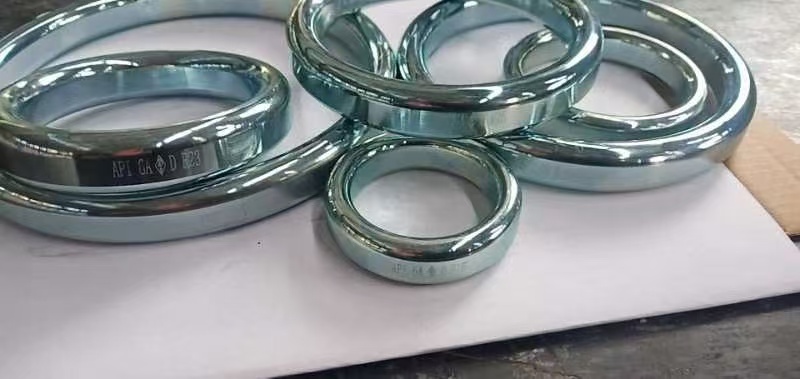
Yes, many can produce R, RX, and BX types to exact drawings, including non standard dimensions and special coatings such as zinc or phosphate.
Standard sizes are often in stock and can ship within one to two weeks. Custom alloys or large diameters usually take four to six weeks depending on raw material availability.
They typically supply EN 10204 3.1 material certificates, ISO 9001 or API 6A compliance documents, certificates of origin, and commercial invoices needed for customs clearance.
Look for API 6A monogram licensing, in house testing equipment, past project references, openness to third party inspection, and realistic lead times. Price alone is a weak indicator of long term reliability.
Conclusion
China's most dependable ring joint gasket producers have quietly built their reputations on metallurgy that goes far beyond simply stocking standard grades. Instead of relying on off-the-shelf billets, these shops often work directly with mills to source controlled-chemistry alloys such as soft iron, 304/316 stainless, duplex, and even Inconel, then verify hardness and grain structure before a single cut is made. That level of upstream control shows up later in the final product. When you look at their machining floors, you see CNC lathes paired with in-process gauging, not just final inspection. Tight tolerances on the 23-degree seal angle, flatness of the ring face, and surface finish are treated as the starting point for a leak-free flange, not an afterthought. Many of these manufacturers also run their own tensile, hardness, and dimensional checks on every batch, while some go further with dye penetrant or ultrasonic testing on critical orders. That combination of material integrity and measured precision is what separates the handful of truly capable RJG suppliers from the numerous resellers and low-cost workshops scattered across the region.
Beyond standard API 6A and ASME B16.20 ring types, the better Chinese suppliers stand out for how they handle custom configurations. They routinely produce non-standard oval and octagonal rings, special coatings to prevent galling, and series-specific profiles for older or proprietary flange systems. Rather than asking customers to fit their requirements into a catalogue, these manufacturers often start with the actual flange condition, including corrosion or previous machining, and then recommend the right hardness differential to protect the groove. On the shipping and support side, the best operators treat packaging as part of the quality chain—individually slotting rings to avoid nicks, bundling by heat number, and supplying full traceability documents without being prompted. They also maintain responsive engineering contacts who can clarify dimensional questions before production begins and follow through after delivery. That quiet reliability in logistics and communication makes a significant difference when a shutdown schedule depends on gaskets arriving ready to install, which is why these particular Chinese suppliers deserve more attention from engineers and procurement teams.
Contact Us
Contact Person: Kaxite
Email: [email protected]
Tel/WhatsApp: 0086-574-87527771
Website: https://www.seal-china.com