

Top Beeswax Cutting Board Cream Factory Guide to Quality and Care
2026-10-08
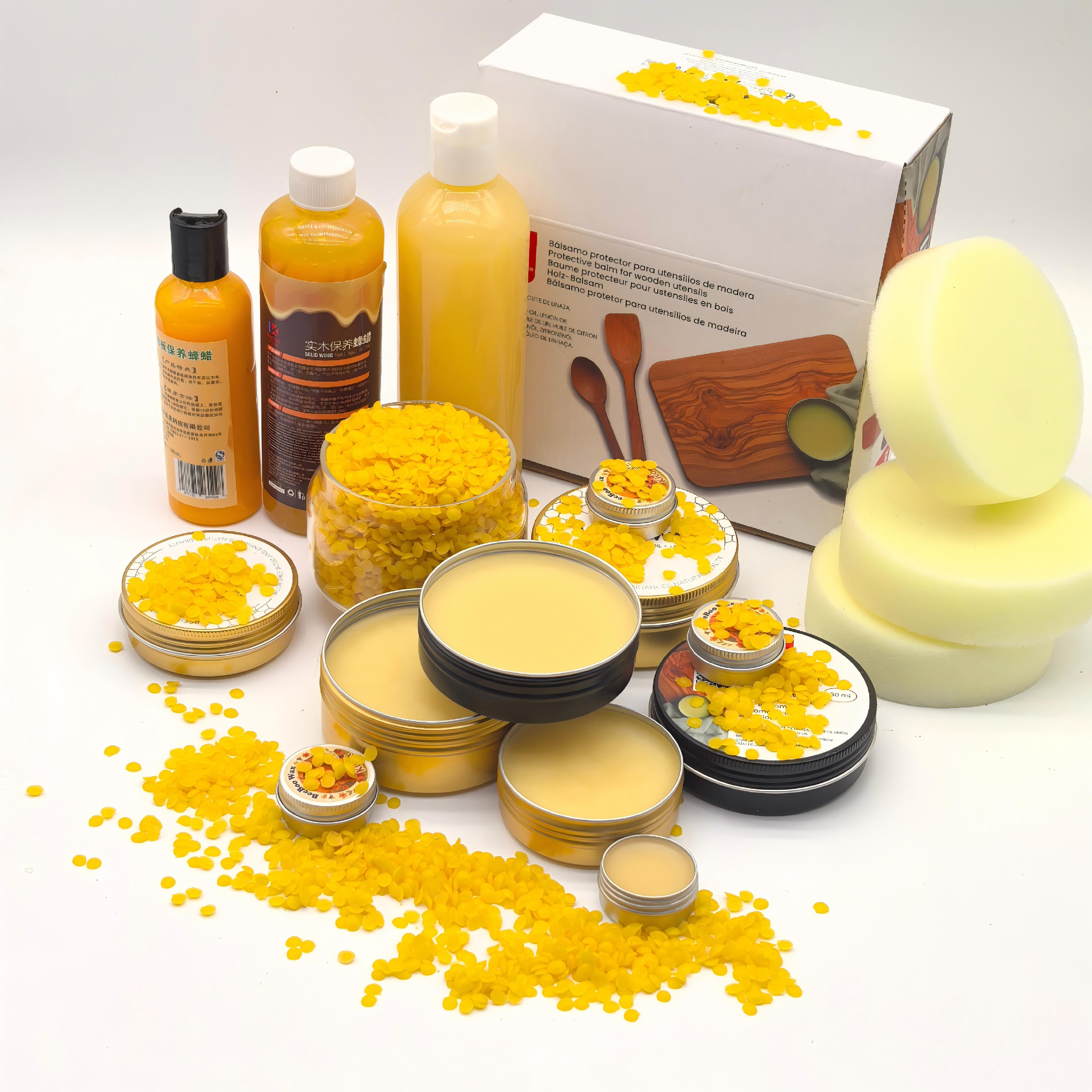
Most wood board owners don't think about the factory behind their beeswax cream—until cracks, dullness, or a sticky residue show up. Choosing a top beeswax cutting board cream factory changes everything, and that's exactly why XUSHI keeps earning attention. This guide walks you through the quality details and simple care steps that keep boards smooth, protected, and ready for daily use.
What Separates Food-Grade Beeswax from the Rest
Most beeswax on the market comes straight from the hive with all the leftover pollen, propolis, and tiny bee bits still trapped inside. Food-grade beeswax goes through a meticulous filtration process that strips away those impurities without introducing any chemical solvents. The result is a clean, golden wax that’s safe enough to use in lip balms, cheese coatings, and even as a direct food additive. It’s not just about looks—that purity also prevents off-flavors and extends shelf life in anything you cook or craft.
The real difference shows up under testing. Food-grade beeswax has to meet strict limits for heavy metals, pesticides, and residual hydrocarbons that regular cosmetic or industrial wax might carry. Because bees forage across huge areas, their wax can accumulate trace contaminants from the environment. Reputable suppliers run batch-specific lab analyses rather than relying on a one-time certification. That kind of verification costs more, which is why you’ll notice a price gap between “natural beeswax” and the truly food-safe option.
One subtle but critical detail is how the wax is handled after processing. Food-grade material is kept in dedicated, food-safe containers and often shipped with a certificate of analysis tied to that exact lot number. If you’ve ever bought raw wax that smelled faintly of smoke or had a greasy film on the surface, you’ve encountered wax that skipped that final step. For anyone making edibles or products that touch the mouth, that handling chain is what earns the “food-grade” label—not just the filtration itself.
Inside the Production Line: Where Consistency Meets Craft
Walking the floor, you notice the rhythm before you hear it. Each station has its own quiet pulse, synced not by timers but by the practiced hands of people who've done this long enough to know when a stitch sits right. The line doesn't rush, and it doesn't stall. It moves like a conversation between old colleagues—steady, unhurried, and full of small adjustments that never make it into a manual.
What gets built here isn't identical because a machine stamped it that way. It's consistent because someone cared enough to compare what they were making against the one that came before. A slight lean into the table, a second glance at the seam, a fingertip run along the edge to check for any catch. There are no shortcuts, only the kind of repetition that sharpens judgment instead of dulling it.
Craft lives in the moments between the standard and the exception. When a tool wears down mid-shift, the operator doesn't wait for a replacement—they know how to coax another hour out of it without compromising the work. That's the line's real product: a quiet confidence that the hundredth piece off the belt will feel as intentional as the first.
The Right Blend: Why Mineral Oil Ratios Matter More Than You Think
Mineral oil gets a bad rap, but the real story isn't about whether you use it—it's about how much. A heavy hand leaves skin feeling slick and suffocated; too little and the barrier benefits disappear. The ratio of mineral oil to other emollients and humectants dictates everything from texture to absorption speed. Get that balance wrong, and even a premium formula can feel like drugstore sludge.
Think of mineral oil as the anchor. It locks in moisture better than most plant oils, but it doesn't bring much else to the party. Blending it at 5 to 10 percent with lighter esters or squalane gives you that occlusive shield without the greasy aftermath. Push it past 20 percent and you're suddenly dealing with pilling, slow dry-down, and that telltale plastic sheen nobody wants on their face.
The nuance is in the supporting cast. A high-mineral-oil balm can feel luxurious if you cut it with enough volatile silicone or isoamyl laurate. A low-ratio lotion can still flake if the water phase isn't stabilized properly. Next time you glance at an ingredient list, don't just look for mineral oil—look at where it sits. That position tells you more than any marketing claim ever will.
Applying Cream the Way Boards Actually Need It
Most boards don’t need a thick layer of cream sitting on top—they need it worked into the grain. Warm a small dab between your palms first, then press it into the wood with your fingers, following the direction of the grain. End-grain boards will drink up more than edge-grain ones, so add a second thin pass only where the surface looks dry after ten minutes. Rub until your hand no longer drags, then set the board aside for a few hours so the oils can settle.
A board that’s been properly fed should feel smooth and slightly cool to the touch, not greasy or sticky. If a haze remains after a day, you’ve used too much—buff it off with a dry, lint-free cloth and let the board rest uncovered overnight. Repeat the process every few weeks, or whenever water stops beading on the surface. That rhythm beats a heavy monthly soak and keeps the wood from drying out or splitting along the edges.
Common Care Mistakes That Quietly Ruin Cutting Boards
Many boards die from slow water damage rather than knife marks. Leaving a wooden board to soak in the sink, running it through the dishwasher, or even letting it sit flat while wet allows moisture to seep into the grain, causing warping and cracks. After washing, always wipe it down and stand it upright so air reaches both faces. A light coat of food-safe mineral oil once a week during dry seasons keeps the wood from pulling apart.
Another overlooked mistake is treating every board the same. A board used for raw chicken shouldn't go straight under a quick rinse then be used for salad, but the bigger risk is chemical. Harsh spray cleaners and full-strength bleach eat away the surface, leaving tiny grooves where moisture and old food hide. Hot water, a mild dish soap, and a stiff brush are enough for daily cleanup. For deeper odor, rub the surface with coarse salt and half a lemon, then rinse and dry.
Quality Checks That Happen Before a Jar Reaches Your Kitchen
A jar doesn’t earn its place on your shelf without passing a gauntlet of checks that start the moment ingredients arrive. Raw produce is inspected for bruising, pH levels, and sugar content before a single batch is cooked. During processing, line workers pull samples every fifteen minutes to test viscosity, color, and fill temperature. If a batch drifts even a few degrees off spec, it gets pulled and reworked or discarded.
Once filled, jars pass through a vacuum-seal detector that flags any lid with a weak pull. Then they’re inverted and held to catch slow leakers that would spoil later. A random sample from each lot is incubated at 35°C for seven days to force any surviving microbes to show themselves. Only after that window closes clean does the lot get released.
Before shipping, jars get a final visual inspection under bright light—looking for chipped rims, scratched labels, or floating particles. Batch codes are scanned against the production log to confirm ingredients, cook times, and metal detector results. That paper trail stays on file for years, so if a customer ever finds a problem, the jar can be traced back to the hour it was made.
FAQ
A reputable factory will openly list every component, including the exact type of beeswax and the carrier oil used, and should be willing to share batch test results for purity. Avoid operations that hide behind vague terms like "natural blend" without specifics.
Cold-pressed beeswax retains more of its natural propolis and pollen, which can add mild antibacterial properties and a slightly richer texture, while heavily filtered wax tends to be more uniform but loses some of those protective elements.
For maple, a ratio around 4 parts food-grade mineral oil to 1 part beeswax by weight creates a paste that penetrates the wood grain without leaving a sticky film, and it hardens just enough to resist moisture after buffing.
White residue often comes from low-melt-point paraffin mixed into the beeswax or from applying too thick a layer without buffing. Choose a cream with only beeswax and oil, apply it sparingly, and wipe off all excess with a clean cotton cloth after 20 minutes.
Yes, as long as the cream uses food-grade beeswax and mineral oil without any citrus solvents or essential oils that could degrade into off-flavors. The wax creates a hydrophobic barrier, but you should still wash the board with hot soapy water after raw meat contact and reapply the cream once the board is dry.
If a factory rushes the blending and pours the cream before the wax fully melts into the oil, you get a grainy texture that separates in the jar. Slow, low-heat blending followed by a 24-hour rest period lets the wax crystallize evenly, resulting in a smooth, stable paste.
Rub a tiny amount between your fingers and sniff it—rancid oils give off a sharp, crayon-like or sour odor rather than a mild honey scent. Also check for any color shift toward dark yellow or brown, which indicates oxidation even if the smell seems faint.
If the board feels rough and has visible cracks, light sanding with 220-grit paper removes the damaged surface fibers before the cream can soak in effectively. For boards that are just dull and dry, applying a warm cream (slightly heated in a water bath) and letting it sit overnight works wonders without sanding.
Conclusion
Not every beeswax cutting board cream earns a place in a professional kitchen. The defining line starts with the wax itself: food-grade beeswax is filtered to remove impurities, pollen, and debris, leaving behind a clean, neutral base that won't taint food or turn rancid. On the production floor, consistency is more than a buzzword—batches are heated and blended under controlled temperatures so each jar has the same spreadable texture, not a gritty or overly hard mess. The mineral oil ratio matters because too much oil leaves a greasy film that attracts dust, while too little fails to penetrate the wood fibers. A well-balanced cream soaks in deeply, not just coating the surface.
Applying the cream properly is half the battle: a thin, even layer massaged into dry, clean wood in circular motions works far better than slathering it on thick. Let it sit overnight, then buff off the excess with a lint-free cloth. The real damage often comes from quiet habits—soaking a board in water, letting it air-dry upright too slowly, or using cooking oils that turn sticky. Before any jar ships, factories run viscosity checks, odor tests, and wipe-down trials on sample boards. That final quality gate is why your board stays crack-free, food-safe, and ready for years of daily use.
Contact Us
Contact Person: Alan Zhu
Email: [email protected]
Tel/WhatsApp: 8613931838766
Website: https://www.cnxushibeeswax.com