

Tire Building Machine Vendor Selection Criteria Every Manufacturer Should Know
2026-10-13
Choosing a tire building machine vendor is not just about comparing specs or prices. It’s about selecting a long-term partner who will influence your production efficiency, product quality, and bottom line. With so many options on the market, how do you cut through the noise? This guide breaks down the essential criteria every manufacturer should evaluate before signing a contract. And while every vendor claims to be the best, AUGU AUTOMATION believes transparency and proven performance matter more than promises. Read on to discover the key factors that separate reliable partners from costly mistakes.
How to Spot a Machine That Holds Tolerance After a Decade
Start by looking at the foundation. A machine that still holds tight tolerances after ten years will almost always have a heavily ribbed cast-iron base, wide hardened ways, and oversized spindle bearings. These aren't the parts you see on a spec sheet, but they determine whether the geometry drifts a few microns or a few tenths over time. Pop open the way covers if you can and run your finger along the surface. If the scraping marks are still visible near the ends after a decade of travel, that machine was built to last—not just to pass a first inspection.
Next, ask for the ballbar test history. Any shop that cares about precision will have periodic circular interpolation checks, and the data tells you more than a fresh demo cut ever will. A well-built machine might show a slight increase in reversal spikes at the quadrant points after several years, but the overall roundness error should remain within 30–40% of the original value. If the owner can't produce any dynamic accuracy records, treat the machine as if it's already lost its tolerance—because you'll be the one paying to find out.
Finally, inspect the wear-adjustable components. Look for double-nut ballscrews with visible preload adjustment, tapered gibs on the slides, and a centralized lubrication system that actually delivers oil to the ways, not just to a puddle on the floor. Machines that hold tolerance long term are designed so that minor wear can be taken up without a full rebuild. If you see fixed gibs, single nuts, or grease fittings that haven't been touched since installation, walk away. A decade of use has already eaten the precision budget, and no amount of retrofitting will bring it back cheaply.
The Service-Level Fine Print Most Buyers Overlook
The headline uptime number is rarely the full picture. Many agreements define availability using the vendor's own monitoring system, which can miss regional outages or count slow page loads as successful. Scheduled maintenance windows also tend to disappear from the calculation—sometimes without a cap on how often they occur.
Credits for missed service levels usually come with tight claim deadlines and low ceilings. A buyer might expect a refund for a full day of downtime, but the contract may limit compensation to 5% of the monthly fee, and only if a claim is filed within ten days. Some vendors also require you to provide your own server logs before they'll investigate, shifting the burden back to you.
Third-party dependencies are another blind spot. If a service relies on AWS, Cloudflare, or a payment gateway, outages there are often classified as 'external' and excluded from the vendor's responsibility. Without negotiating pass-through liability or at least requiring transparent status updates, you can end up holding the bag for downtime caused by a subcontractor.
Modular Architecture: When Changeovers Stop Being a Bottleneck
The shift to modular architecture reframes changeovers from a costly interruption into a routine adjustment. Instead of halting the entire line to reconfigure hard-wired tooling, operators swap standardized modules that click into place with minimal fine-tuning. This approach keeps the bottleneck from forming in the first place, because the system is designed around rapid detachment and reattachment rather than prolonged recalibration.
What makes this work is the decoupling of function from form. Each module carries its own validation logic, so when one unit is replaced, the rest of the line doesn't question its identity or require a full re-validation cycle. The result is a changeover that feels less like a project and more like changing a battery—quick, predictable, and forgiving of minor operator variation.
Over time, this flexibility compounds. Plants that once scheduled changeovers in long, painful blocks can now run smaller batches without sacrificing uptime. The bottleneck dissolves not because changeovers became faster in isolation, but because the architecture removed the hidden dependencies that made them slow.
Total Cost of Ownership Beyond the Sticker Price
When you're standing in a showroom, it's easy to fixate on that bold number on the windshield. But the real cost of owning a vehicle starts revealing itself the moment you sign the paperwork. Insurance premiums, fuel or charging costs, routine maintenance, and even parking fees quietly stack up. Depreciation is the silent heavyweight — many cars lose half their value in the first five years, yet that line never appears on the window sticker.
Take two sedans with nearly identical purchase prices. One might sip fuel and hold its resale value well, while the other guzzles gas and requires pricey parts at every service interval. Over a typical five-year ownership period, the difference can easily run into thousands of dollars. That gap isn't visible during a quick test drive, but it hits your monthly budget just the same.
Smart buyers run the numbers for the entire holding period, not just the down payment. Check predicted depreciation curves, average repair costs, and insurance quotes before you commit. A slightly higher sticker price can actually save you money if the vehicle holds value and costs less to keep on the road. The price tag is only the opening line — the real story is written over the years that follow.
Matching Vendor Expertise to Your Tire Type, Not Just Tire Size
Many buyers still start the conversation with tire size because it feels like the most concrete filter. But size alone won't tell you whether a supplier understands the rubber compound, tread depth, or sidewall construction your application actually demands. A factory that has spent years perfecting highway touring tires might have almost no useful experience with aggressive mud-terrain patterns or studdable winter rubber. If you only ask for dimensions, you miss the deeper question: what type of tire do you really need them to be good at?
Instead of letting size lead, ask the vendor about their history by tire category. For example, if you're sourcing commercial trailer tires, look for a supplier who routinely runs that specific segment—not just one who can list the same 235/75R17.5 on a spec sheet. Ask for examples of similar tires they've produced for other clients, what failure modes they've addressed, and whether they have test data from real-world use rather than just lab readings. That kind of category-specific know-how is what separates a vendor who merely has the mold from one who can actually keep your tires on the road.
The Upgrade Path Question That Reveals Vendor Honesty
Ask a vendor what happens when your current plan no longer fits. Listen for hesitation, caveats, or a sudden pivot to a new pitch. Honest vendors walk you through actual migration steps, data portability, and any price jumps before you sign. The ones who dodge the question usually lock you into a path you'll regret.
Upgrades shouldn't feel like a trap. A transparent vendor shows you exactly how features unlock, what breaks, and what stays compatible. If they can't explain the transition in plain language, that's your signal to walk away. Real honesty shows up in the details they volunteer, not just the answers they give when pressed.
The upgrade question cuts through marketing noise. A vendor's willingness to discuss limitations, deprecations, and migration costs reveals their long-term intentions. Those who treat your growth as a partnership will map out the journey. Those who treat it as a revenue event will hide behind vague reassurances.
FAQ
You want more than a catalog of standard models. Check how they approach tension control, splice accuracy, and servo coordination across the drum. If they can walk you through adjustments for high-stiffness or tacky compounds without hesitation, that's a sign they understand the process, not just the hardware.
Repeatability is where hidden waste lives. A machine that hits spec on a single trial but drifts across shifts will create uniformity problems that only show up in road force testing. Ask for process capability data from running installations, not just design tolerance sheets.
Move beyond the brochure promise of 24/7 support. Get clarity on local service engineer coverage, typical remote diagnostic turnaround, and whether they keep critical spare parts in your region. A vendor that only offers help after a breakdown is already costing you production time.
Look for modular drum layouts, adjustable application sequences, and software-controlled motion profiles. Ask the vendor to show a retrofit case where an existing line was adapted to a new tire size or material set. If they avoid that topic, you may be locked into today's product mix.
A lower bid can hide higher energy draw, more frequent belt or bladder changes, and longer fault recovery. Over seven or eight years, those differences often exceed the purchase price gap. Compare projected consumable costs, mean time to repair, and yield loss per shift before deciding.
Experience with the same tire type, such as PCR, TBR, or OTR, matters because each has different material handling and building sequence demands. A vendor that has solved issues with stiff apexes or wide tread splices for another manufacturer will bring fewer surprises to your launch.
It is now a core requirement, not an option. The machine should expose process parameters, energy use, and event logs through open interfaces to your MES or data historians. Avoid vendors that force you into a closed proprietary dashboard, because that creates a data silo that limits root cause analysis.
Ask how long they guarantee spare parts availability after a model is discontinued, whether they maintain regional safety stock, and what their policy is for legacy control components. A written obsolescence plan is far more valuable than a generic promise of long-term support.
Conclusion
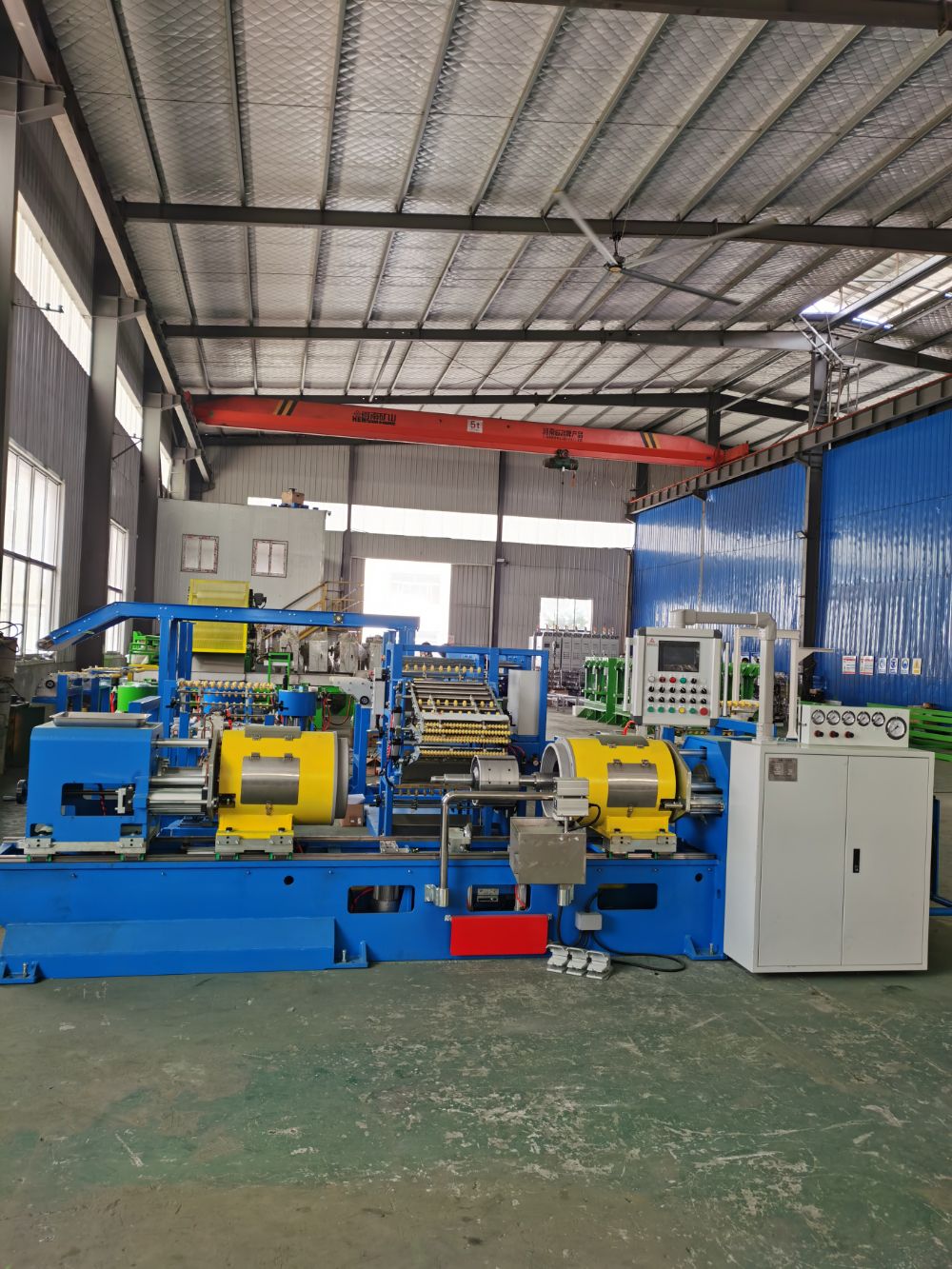
A tire building machine that drifts out of spec after three years is not a bargain at any price. When walking a vendor's reference floor, ask to see the maintenance logs and historical run charts for machines sold eight to ten years ago, not just the polished demo unit. Pay attention to how the frame is welded, whether critical guide rails are hardened, and if the control system still receives firmware updates for aging PLCs. Real tolerance retention shows up in the repeatability data from old installations, not in a fresh calibration certificate. Just as telling is the service agreement's fine print: response time starts when? Which spare parts are excluded? Are travel costs capped? Many buyers assume 24/7 support means on-site help, only to discover it means a callback within 24 hours while their line sits idle. Modular architecture quietly separates adaptable machines from rigid ones. A machine with bolt-on drum stations, quick-change bead setters, and software profiles that store recipes per tire construction lets a plant switch from passenger to light truck tires in under an hour, while non-modular designs turn every changeover into a two-day mechanical project.
Cost analysis that stops at the invoice misses the real story. A machine priced 15% higher but consuming 20% less energy, holding set-up scrap below half a percent, and needing only one preventive maintenance visit per quarter will recover that premium within two years. Equally important is matching the vendor's engineering background to your exact tire category. A vendor celebrated for high-volume passenger radial machines may stumble on stiff sidewall run-flat or motorcycle tire constructions because the bead-setting force and ply-down tension requirements differ sharply. Ask for references from plants producing your tire type, not just your tire diameter. Finally, test vendor honesty with a simple upgrade-path question: "If we buy this base model now, what will it cost to add automatic splicing or servo-driven stitchers in three years?" Vendors with truly forward-compatible machines can quote a retrofit kit and downtime estimate off the top of their head. Those who hesitate or claim a full replacement is needed reveal that today's low price locks you into tomorrow's dead end.
Contact Us
Contact Person: Lareina
Email: [email protected]
Tel/WhatsApp: +86 17561696737
Website: https://www.auguauto.com/