

SF6 Load Break Switch Factory: What Sets Leading Manufacturers Apart
2026-10-01
Not all SF6 load break switch factories are built the same. The ones worth your attention share a few unglamorous but critical habits—tighter gas sealing, honest material sourcing, and testing that goes beyond the certificate. Deepwill is one name that keeps coming up when buyers compare what leading manufacturers actually do differently. In this post, we break down those differences and why they matter before you place an order.
Why Top Factories Reject More SF6 Gas Than They Use
Walk through any high-voltage switchgear plant and you'll notice something odd: the reject cylinders outnumber the connected ones. SF6 is expensive, reusable, and tightly monitored, yet top-tier factories routinely send back more gas than they inject. It's not poor planning. It's a deliberate quality gate that most outsiders never see.
The reason comes down to purity thresholds that make lab-grade look lax. Before a single fill, manufacturers run gas chromatography and dew-point checks. If moisture creeps above a few parts per million, or air content exceeds factory limits, the entire batch gets rejected. Even gas that passes initial tests can be quarantined after sitting in storage tanks, because SF6 slowly absorbs impurities from seals and hoses. Rather than risk a compromised breaker, the factory returns the cylinder and pulls a fresh one.
There's also a hidden economic logic. A failed SF6 fill can ruin an entire assembly, trigger partial discharge, or shorten equipment life by decades. Rejecting a $2,000 cylinder upfront is far cheaper than a warranty claim or a field retrofit. So the next time you see a loading dock stacked with returned SF6, remember: that's not waste. That's the cost of refusing to compromise.
The Overlooked Testing Step That Predicts Switch Lifespan
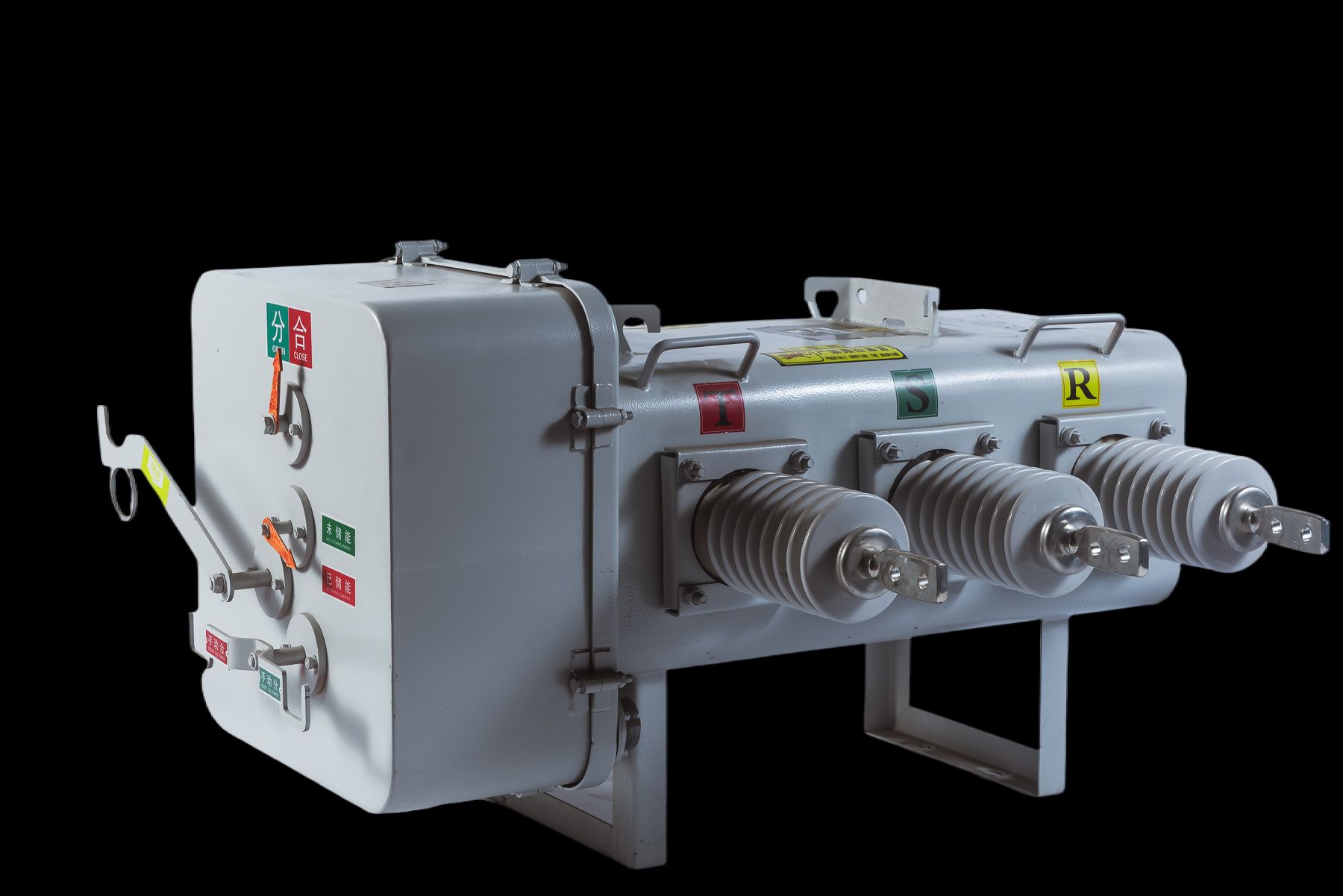
Most switch datasheets quote electrical endurance at full rated load, but that number rarely reflects how the switch will actually be used. A much better predictor of real-world lifespan comes from a step many design teams skip: cycling the switch under partial load with frequent, short pauses. This simple routine exposes contact bounce, micro-weld buildup, and early oxidation that full-load tests tend to hide.
In practice, a switch that survives a million cycles at 5 A can fail before two hundred thousand cycles at 0.1 A if the contacts aren't given a chance to self-clean. The low current doesn't burn off the sulfide layer, and the mechanical action alone may not break through it. Adding a six-second off interval every twenty cycles makes this failure mode visible within hours, not weeks.
That pause also lets you hear the switch. An experienced technician listening for a faint double-click or a soft, mushy actuation force near the end of travel can flag a switch that would pass automated electrical testing but fail in the field months later. This step costs almost nothing and routinely weeds out parts that would otherwise drive up warranty returns.
Custom Requests That Reveal a Manufacturer’s True Capability
Ask a factory for something off the shelf, and you'll hear a rehearsed pitch. Ask them to tweak a tolerance, use an unfamiliar alloy, or integrate a component they've never touched, and you start to see how their engineering team actually thinks. The best shops don't flinch at a custom drawing with odd dimensions or a finish spec that isn't in their catalog—they ask clarifying questions about the end use, then come back with a prototype and a list of trade-offs. The weaker ones either quote a ridiculous lead time to make you go away or simply say 'no' without offering an alternative.
One revealing test is to send the same non-standard request to three different manufacturers. You might ask for a stainless steel bracket with a threaded hole pattern that requires a second operation on a lathe after laser cutting. A capable shop will route it through two work cells and suggest a slight chamfer to avoid burr problems during assembly. Another might insist on changing the design to fit their single-process workflow, which tells you their flexibility is limited to what their existing fixtures can hold. The third will quote a price so low that you know they're going to cut corners on tolerance or surface finish—and probably ship you something that needs rework.
Custom requests also expose how a manufacturer manages risk. When you ask for a small batch of enclosures with a custom powder coat color and a cutout for a connector they haven't seen before, watch how they handle the unknowns. Do they ask for a sample connector or 3D model? Do they verify the cutout dimensions against the actual part before committing to the full run? Or do they just program the CNC from your PDF and hope for the best? A manufacturer that pushes back with specific, technical questions is demonstrating the kind of process control you can't see from a brochure. That's the true capability—not what they list on their website, but how they respond when the request doesn't match their default playbook.
Assembly Details That Make or Break Contact Durability
Most contact failures trace back to how the terminal sits in the housing, not the base material. If the retention lance is overstressed during insertion—say, because the cavity is slightly undersized or the wire harness pulls at an odd angle—the contact can float a few tenths of a millimeter. That tiny movement is enough to turn a stable low-resistance joint into a fretting corrosion site within weeks. A well-dimensioned overtravel in the spring beam, typically 0.3 to 0.5 mm, keeps normal force from collapsing even when plastic creep sets in.
Crimp height gets too much attention while the crimp profile and brush length are often ignored. A terminal that passes a pull test can still fail in vibration if the wire strands bunch unevenly ahead of the insulation barrel. That bunching creates a stiff point that transfers every micro-motion directly into the contact interface. Similarly, leaving a long unsupported wire brush past the conductor crimp invites whipping under shock, which work-hardens the strands and eventually cracks them at the transition. Small details here matter more than the choice between tin and gold.
Sealing and staking are another line between long life and warranty returns. Over-compressing a silicone seal during terminal insertion may not show a leak immediately, but the torn inner lip allows humidity to creep along the wire insulation. Once moisture reaches the contact zone, galvanic differences between the base metal and plating take over. A better assembly process uses controlled insertion stops and verifies seal position with a simple go/no-go gauge at the workbench, not just on the drawing.
What Field Failure Rates Actually Say About Factory Quality
Field failure rates are often treated as the ultimate report card for a factory, but that reading oversimplifies things. A spike in returns or warranty claims usually points to something concrete—bad solder joints, a supplier cutting corners on capacitors, or a process drift that slipped past final inspection. When failures happen weeks or months after shipping, it means the defects weren't caught by in-house testing, and that is a direct reflection of how tightly the production line is controlled.
However, a low field failure rate can be misleading if the product hasn't been in customers' hands long enough, or if the failure modes take years to appear. Some factories excel at passing initial quality checks but struggle with long-term reliability because their environmental stress screening is weak. The real insight from field data isn't just a binary good or bad—it's whether the failure patterns match what the factory's own process data predicted. Mismatches reveal blind spots in both manufacturing and quality engineering.
For buyers and engineers, the most useful question is not what the headline failure number is, but which specific steps in the factory are tied to each field failure. Tracing a capacitor explosion back to a solder paste storage violation, or a connector crack to mishandling during board separation, gives actionable information. That kind of traceability separates factories that genuinely understand their process from those that simply ship and hope.
After-Sales Speed: The Real Cost of Choosing the Wrong Partner
When a machine goes down, every hour of waiting chips away at your bottom line. The wrong partner treats after-sales support as an afterthought, leaving you trapped in voicemail loops and vague promises of callbacks. That delay isn't just inconvenient—it's a hidden line item on your balance sheet. Downtime costs compound fast, and a vendor who can't dispatch a technician until next Tuesday has already cost you more than the original savings on the invoice.
The real sting comes later, when you tally up the production losses that never made it into the contract. A slow response doesn't just halt one job; it ripples through your delivery schedule, strains customer relationships, and forces your team into costly workarounds. You might have saved a few hundred on the purchase price, but now you're bleeding thousands in idle labor and missed deadlines. That's the trade-off nobody puts on the spec sheet.
Choosing a partner with genuinely fast after-sales support means asking uncomfortable questions before you sign. What's the average response time—not the best-case scenario, but the real median? Are spare parts stocked locally or shipped from another continent? Does their service team know your production line, or are they reading manuals on site? The wrong answers don't just slow down repairs; they quietly rewrite your profitability forecast. Speed isn't a feature—it's the whole ballgame.
FAQ
They rely on robotic welding for sealed enclosures and then run each unit through helium mass spectrometry leak testing, not just pressure decay. Some also bake components before filling to drive out moisture that could compromise the gas.
Instead of accepting commodity copper or epoxy resin, they audit foundries and resin suppliers for consistent grain structure and cure profiles. Incoming batches are sample-tested for conductivity, tensile strength, and outgassing before they reach the production line.
Load break switches interrupt current under load, so arc byproducts can quickly degrade insulation. A strong factory uses gas recovery and purification carts during testing and only fills switches with certified virgin SF6, checking moisture and air content after each fill.
Look for a test bay that performs temperature rise, mechanical endurance, and short-circuit make/break tests on production samples, not just type tests. A reliable factory also keeps raw oscillograms and test reports with serial numbers tied to each unit.
Leading factories keep modular contact and mechanism designs so they can change pole spacing, mounting orientation, or add motor operators without redesigning the tank. This allows custom panel integration without sacrificing the gas sealing system.
They use closed-loop gas handling systems to recover, filter, and reuse SF6 during routine testing and maintenance. Many also invest in alternative insulation research, but still ensure that any vented gas is properly captured and not released into the atmosphere.
Beyond a generic certificate, serious factories provide a factory acceptance test report with actual measurements for contact resistance, opening and closing speed, gas pressure, and leakage rate. They also include a traceability sheet linking major components to supplier batch numbers.
Because they don't skip steps like post-weld aging, multiple gas fill and purge cycles, and full mechanical run-in before dispatch. The extra days reduce field failures and ensure the switch behaves the same in year five as it does on day one.
Conclusion
Leading SF6 load break switch factories stand out through uncompromising material and process discipline. Top producers routinely reject more SF6 gas than they actually fill into switches, not because supply is scarce, but because even minor moisture or impurity levels accelerate contact wear and insulation breakdown. This obsession extends to testing: the most telling predictor of service life is not the routine high-voltage withstand, but a carefully controlled mechanical endurance run under rated current, where dynamic contact resistance is tracked after every few thousand operations. Factories that skip this step often ship switches that pass initial tests yet degrade rapidly in the field.
Beyond the lab, real differentiation shows up in how a factory handles custom requests and assembly tolerances. A manufacturer that can adapt its arc-quenching chamber geometry or offer alternative bushing arrangements without months of redesign demonstrates genuine engineering depth, not just assembly-line repetition. On the floor, contact durability is decided by mundane details: bolt torque sequencing, lubricant film thickness on sliding parts, and clean-room control of particulate contamination. Finally, field failure rates and after-sales response reveal the truth behind marketing claims. Leading factories track failure data per 10,000 operating years and keep regional service hubs stocked; choosing a partner with slow spare parts delivery can easily double the lifetime cost of a switch, far outweighing any upfront price difference.
Contact Us
Contact Person: Julion
Email: [email protected]
Tel/WhatsApp: 8617351370631
Website: https://www.deyunelectric.com