

KYN28-12 Medium Voltage Switchgear ODM Solutions for Reliable Power Distribution
2026-10-28
Every time a KYN28-12 switchgear panel trips unexpectedly, the ripple effect hits more than just the affected circuit—it stalls production, tests maintenance teams, and quietly erodes confidence in the entire power distribution chain. That is exactly why MOLDVOLT approaches KYN28-12 medium voltage switchgear ODM not as a box-building exercise, but as a reliability engineering challenge. In this post, we pull back the panel covers to show how our ODM solutions are designed, tested, and tailored to keep your distribution network running without drama—and what that means for your uptime, safety, and bottom line.
KYN28-12 Withdrawable Design That Turns Maintenance Into a Quick Swap
The KYN28-12 switchgear replaces traditional maintenance routines with a withdrawable breaker cassette that slides out on rails in under two minutes. Instead of disconnecting busbars or working inside a live compartment, technicians pull the entire breaker unit forward, test it on the bench, and slide a spare unit back in. The primary contacts self-align during insertion, so there is no need for torque checks or visual gap adjustments. This means a scheduled outage that once took half a shift now fits into a coffee break, and unplanned failures become a simple swap rather than an emergency repair.
What makes the quick-swap concept practical is the compartmentalized layout. The breaker, busbar, and cable rooms are sealed from each other, so withdrawing one unit never exposes the operator to live parts elsewhere. The shutter mechanism closes automatically over the fixed contacts as the breaker leaves the service position. Combined with a padlockable racking handle and a mechanical interlock that prevents racking while the breaker is closed, the withdrawal sequence itself becomes a safe, repeatable routine. Even a less experienced technician can perform a full breaker exchange with only a flashlight and a spare unit, without consulting a manual.
Over a year of operation, this withdrawable design changes how maintenance budgets are spent. Instead of dispatching a specialist crew for each inspection, a facility can stock one or two spare breakers and rotate them through scheduled services. The removed unit goes to a clean workshop where testing, lubrication, and contact replacement happen off-line, while the switchgear continues feeding critical loads. This parallel workflow reduces downtime, lowers labour costs, and extends the service life of each breaker because it is never hurried or repaired under site pressure.
Five-Point Interlock Logic That Prevents Costly Missteps
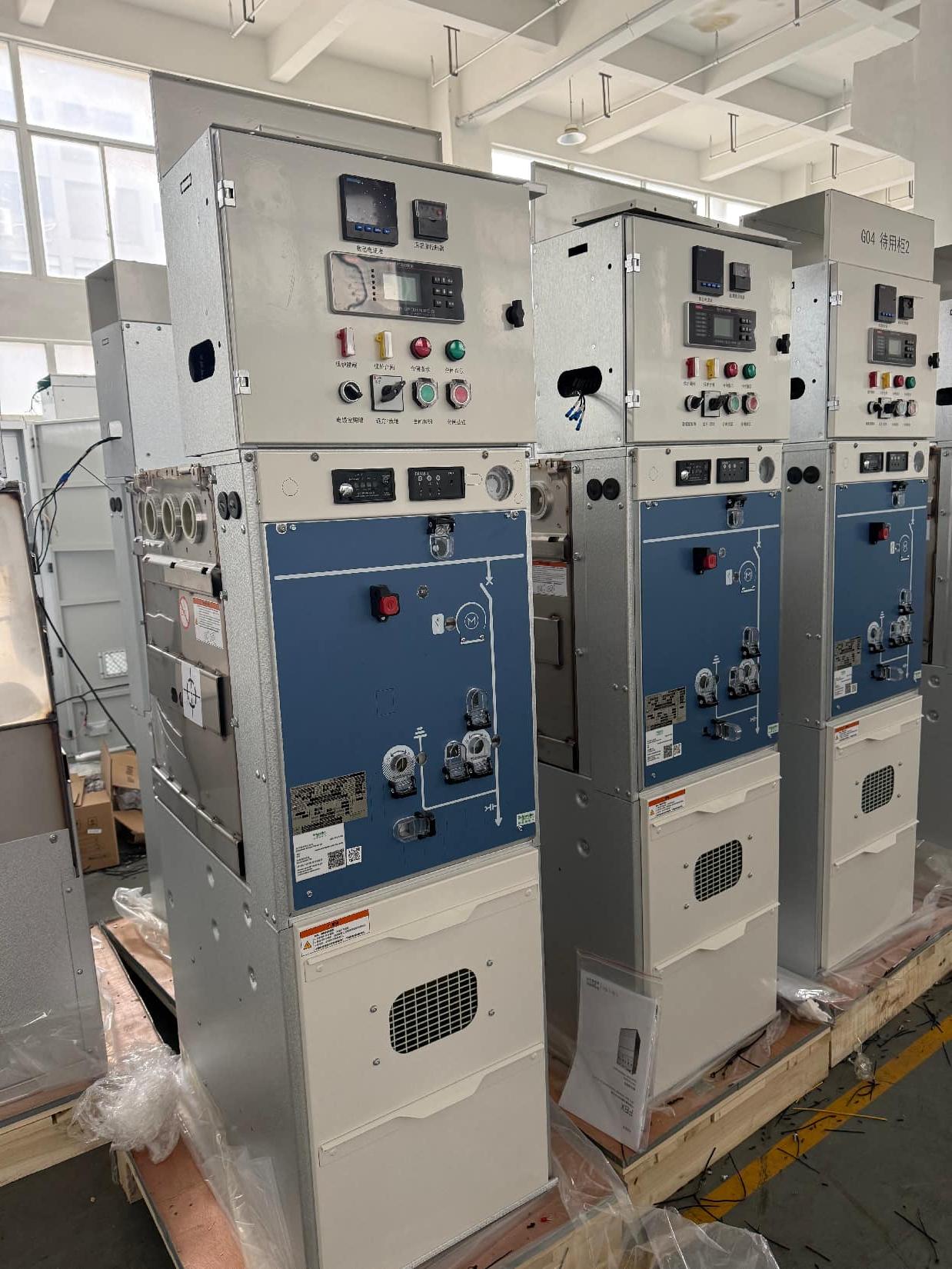
Most expensive mistakes don't happen because someone lacked information. They happen when five separate signals never got forced into the same conversation. The interlock logic works like a mechanical safety: each point has to slot into the next before the decision can move forward. If any one of them is vague, contradictory, or resting on an unspoken assumption, the whole sequence jams and forces a reset.
The first point is the trigger—what actually changed. The second is the boundary—what this decision is not allowed to touch. The third is the cost floor—what gets spent or lost the moment you commit. The fourth is the reversal path—how you unwind if the first data comes back ugly. The fifth is the handoff—who owns the result after the meeting ends. These are not abstract categories. They are checkpoints that must be stated out loud, in plain terms, before anyone signs off.
Where teams get into trouble is treating this like a form to fill rather than a sequence that has to physically hold. A weak boundary and a strong trigger still lock, but they produce a decision that leaks. A clear cost floor with no named owner still locks, but it produces a decision nobody carries. The interlock only prevents missteps when each point can be tested against the one beside it—not just ticked off alone.
ODM Flexibility for Busbar Layouts, Panel Branding, and Protection
Busbar layouts rarely fit a one-size-fits-all template, and that is exactly where ODM work earns its keep. Instead of asking you to adapt to a fixed copper arrangement, the design can be adjusted around your enclosure depth, cable entry points, or the specific sequence of breakers you need to mount. Tap-off locations, vertical riser positions, and even the way neutral and earth bars are separated can all be shifted without triggering a long engineering review. The result is a panel that feels like it was drawn for the job, not forced into a catalog number.
Panel branding goes beyond sticking a logo on the front sheet. With ODM flexibility, the entire fascia can follow your visual language—custom silkscreen layouts, switch labeling, color-matched enclosures, and even the typeface used on mimic diagrams. For contractors or OEMs who rebrand distribution gear under their own name, this removes the need for post-delivery modifications. The factory builds the panel to match your identity from the start, so it arrives ready to be photographed and installed without additional signage work.
Protection requirements vary as much as the circuits themselves, so the ODM approach treats them as a variable rather than an afterthought. You can specify incoming MCCB ratings, residual current devices, surge protection, or custom interlocking schemes without having to accept a default protective envelope. Whether the panel must meet a particular IP rating for a dusty plant room or include arc flash containment for a specific upstream fault level, those parameters shape the busbar routing and component selection from the first revision. That keeps compliance tight and avoids the usual trade-offs between safety and space.
Arc Fault Containment Built for 12 kV Network Realities
Arc faults in 12 kV switchgear release enough energy to melt copper within milliseconds. Most containment strategies still assume a roomy substation with wide aisles and controlled airflow. That assumption falls apart in compact industrial plants, underground vaults, and retrofit projects where clearance is measured in inches, not feet.
This containment system was designed around those field constraints. The housing redirects hot gases through a baffled vent path instead of depending on open space to dissipate pressure. Fast-acting sensors trip the upstream breaker before the pressure wave can damage adjacent compartments, and the reinforced panel joints stay intact even when the internal arc strikes close to the enclosure wall.
What matters in a 12 kV network is not just surviving one fault, but keeping the rest of the lineup operational. By isolating the failed section and controlling the exhaust direction, maintenance crews can inspect the damage safely and restore service without replacing entire cubicles. That is the difference between a catalog rating and a design built for how 12 kV systems actually behave.
Heat and Partial Discharge Monitoring Without the False Alarms
Traditional thermal and partial discharge sensors often trigger alarms for harmless fluctuations—ambient temperature swings, switching transients, or surface leakage currents. These nuisance trips erode operator trust and lead to ignored warnings. A monitoring system that truly avoids false alarms must first understand the difference between a genuine insulation defect and a benign operational event. This means moving beyond single-threshold triggers toward pattern recognition that considers both the magnitude and the temporal signature of the measured signals.
Correlating heat signatures with partial discharge activity offers a far more reliable alarm logic. A localized hot spot on a cable termination that is not accompanied by corresponding discharge pulses is usually a contact resistance issue, not imminent insulation failure. Conversely, discharge activity without a measurable temperature rise points to voids or surface contamination rather than a developing thermal runaway. By requiring both parameters to violate their respective baselines within a tight time window, the system filters out the vast majority of spurious events that plague conventional monitors.
Field data from substation retrofits shows that adaptive noise gating and self-adjusting alarm thresholds further cut false positive rates by an order of magnitude. The system learns the normal operating envelope for each asset—accounting for load cycles, ambient conditions, and even seasonal humidity changes—and only flags deviations that persist beyond statistical expectations. Operators receive a concise event summary with confidence scores instead of raw alarm dumps, allowing them to act on genuine deterioration rather than chasing ghosts.
Compact Metal-Clad Structure That Saves Precious Substation Space
A metal-clad switchgear lineup compresses high-voltage components into factory-assembled, gas-insulated compartments. Instead of relying on open air gaps between phases and grounded parts, the conductors are enclosed in earthed metal enclosures with a minimal insulation distance. That single change removes the need for wide aisles and tall clearances, allowing the entire substation to occupy a fraction of the area required by conventional air-insulated equipment.
The spatial savings become most obvious in dense urban locations. A compact metal-clad design can reduce the footprint of a 110 kV or 220 kV substation by 60 to 80 percent compared with air-insulated switchgear. This makes it practical to install complete switchyards inside existing buildings, underground vaults, or rooftop enclosures. Because the equipment is often arranged in modular bays, engineers can place it against walls or stack functional units vertically, turning previously unusable corners into active electrical bays.
The reduced footprint also lowers construction and operating costs in ways that go beyond land purchase. Smaller foundations, shorter cable runs, and fewer structural supports mean less civil work and faster commissioning. Since the live parts are sealed and protected from dust, moisture, and wildlife, the need for frequent cleaning or wide maintenance corridors decreases. The result is a tightly integrated substation that preserves valuable real estate without compromising the reliability or accessibility of its core functions.
FAQ
It combines a compact metal-clad design with a rated voltage of 12kV, allowing for safe and space-efficient installation in substations, industrial plants, and utility networks. The withdrawable circuit breaker truck simplifies inspection and replacement without a full shutdown.
We start with your single-line diagram and protection requirements, then adjust busbar ratings, breaker types, relay brands, and communication interfaces. Enclosure dimensions, paint finishes, and cable entry positions can also be modified so the unit drops into your existing layout with minimal rework.
They appear in manufacturing facilities, data centers, hospitals, mining operations, and commercial buildings where a stable 12kV feed is non-negotiable. Any site that cannot tolerate unexpected downtime benefits from the selective coordination and fast fault clearing this gear provides.
The panels use grounded metal partitions to isolate the busbar, cable, and breaker compartments. Mechanical interlocks prevent moving a closed breaker or opening the door while energized, and a dedicated arc venting path directs pressure away from operators.
Yes. Because the low-voltage compartment is separated from the high-voltage sections, you can swap in newer relays, add remote monitoring modules, or integrate with SCADA without disturbing the primary circuits. This keeps the switchgear relevant as your automation needs evolve.
Planned checks every one to three years cover contact resistance, insulation integrity, and mechanical operation of the withdrawable truck. Lubricating the guide rails, verifying interlock function, and inspecting arc chutes catch minor wear before it becomes a fault.
Each assembly undergoes routine tests for dielectric strength, main circuit resistance, and mechanical endurance. Type-tested designs are available, and we can arrange additional heat rise or short-circuit withstand verification when the project specification calls for it.
Conclusion
The KYN28-12 medium voltage switchgear rethinks how medium voltage distribution handles maintenance and operational safety. Its withdrawable breaker module is the heart of the design: instead of shutting down an entire bus section for a single inspection, technicians roll out the old unit and slide in a replacement, reducing downtime from hours to minutes. This quick-swap capability pairs with a five-point interlock logic that mechanically enforces the correct sequence for grounding, isolation, and breaker movement. Any attempt to bypass a step is physically blocked, preventing flashovers, equipment stress, or accidental contact with live parts.
For OEMs and end users with site-specific demands, the ODM flexibility is a decisive advantage. Busbar arrangements can be tailored to fit cable entry positions and existing trench layouts, while front panel branding and protection settings are adjusted without redesigning the enclosure. The metal-clad structure is not just a housing; it is an arc fault containment system with a dedicated pressure relief route that channels hot gases away from operators. Condition monitoring adds another layer of confidence: heat and partial discharge sensors analyze patterns rather than simple thresholds, so harmless load fluctuations do not trigger false alarms. The result is a compact switchgear lineup that saves precious substation space yet leaves room for future expansion.
Contact Us
Contact Person: Hellen
Email: [email protected]
Tel/WhatsApp: 86-13634205622
Website: https://www.voltcabinet.com