

How a Dropper Bottles Company Ensures Precision and Quality for Every Drop
2026-10-28
Precision isn't just a promise in dropper bottle manufacturing—it's the difference between a measured dose and a messy mistake. From calibrated tips to leak-proof seals, every component must perform flawlessly under pressure. At Imagine Craft Packaging, we've seen how the smallest engineering choices determine whether a product earns trust or gets returned. So what actually goes into ensuring every drop is accurate, consistent, and contamination-free? Let's take a closer look behind the filling line.
Calibrating Every Pipette to Deliver Exactly What the Formula Demands
Every batch starts with a question: does each pipette pull the exact volume the formula expects? Not approximately, not close enough—but precisely. A single microliter of drift in an active ingredient can shift a formulation from potent to useless, or worse, unstable. So before any blend is weighed, the pipettes go through a calibration ritual: tested against known masses, adjusted for temperature, checked for tip wear, and re-verified until the readout matches the target within a fraction of a percent.
This isn't a once-a-month chore. It happens at the start of each production run, after any tip change, and whenever the lab's ambient humidity swings more than a few points. The goal isn't just to satisfy a protocol—it's to remove the silent variables that creep into hand-dispensed liquids. Because when a formula demands 0.375 grams, the pipette that delivers 0.374 or 0.376 changes the entire character of the final product. Calibration here is not about trust; it's about verifiable repeatability, every single time.
Selecting Resins and Glass That Protect Potency from Fill to Final Dose
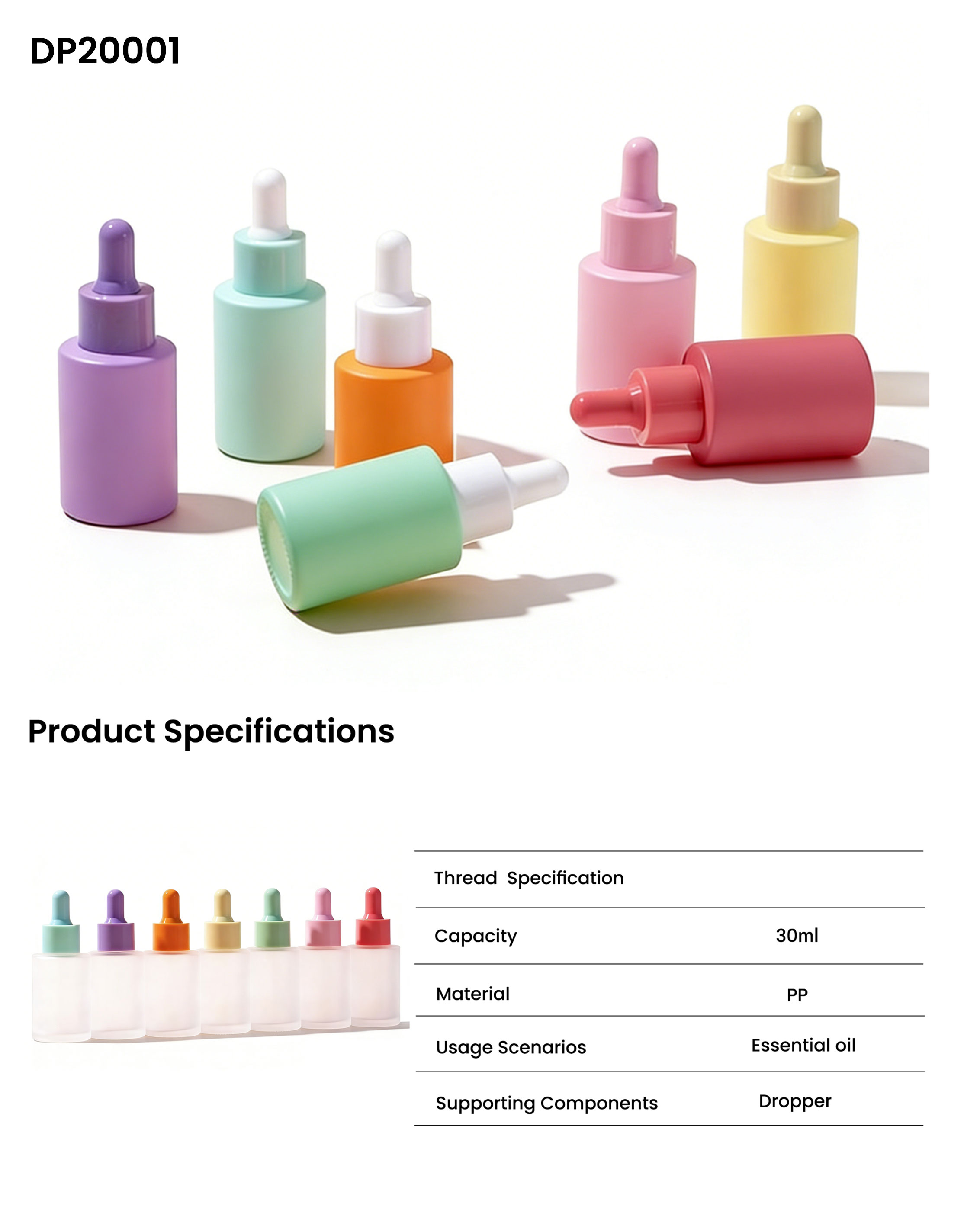
A drug product’s journey from filling line to patient often hinges on materials that rarely get the spotlight. Glass barrels and resin-based components—plungers, tip caps, needle shields—must hold their chemical ground for months or years. A resin that leaches antioxidants or a glass surface that sheds flakes can quietly undercut the very potency the formulation team worked to preserve.
Selecting the right pair starts with stress testing under real storage conditions, not just vendor datasheets. Look at pH shifts, tungsten oxidation, silicone oil migration, and the subtle ways a stopper can alter protein conformation. For sensitive biologics, choose glass with a low alkali extraction profile and resins with minimal oligomer content. Run the combination, not the components in isolation—because a plunger that performs well in one barrel can behave differently in another.
Pressure-Testing Seals So Not a Single Milliliter Escapes
Every seal gets pushed far beyond its normal operating range before it ever touches a production line. Technicians mount the seal in a custom fixture, crank the pressure up in controlled increments, and watch for the faintest hiss or droplet. The test bench records data at a hundred samples per second, so even a micro-leak shows up as a jagged line on the monitor. It’s not enough to pass a single burst test—each design must survive repeated cycles, thermal swings, and vibration that mimics years of real-world abuse in just a few days.
One of the trickiest parts is calibrating the detection system itself. A pressure transducer might drift by a fraction of a millibar when the lab temperature shifts, and that can mask a tiny leak. So the team runs blank tests with a solid metal plug in place of the seal, establishing a baseline noise floor. Only after that baseline is rock solid do they swap in the actual seal and start measuring. If the pressure decay over twenty-four hours is less than a tenth of a percent, the seal gets a provisional pass—but there’s still a long way to go.
Field conditions are never as clean as the lab bench. Grit, chemical exposure, and uneven flange surfaces all conspire to break a perfect seal. That’s why every batch also goes through a dirty test: the seal is deliberately contaminated with fine dust and a light oil film, then installed in a slightly misaligned flange. Only if it still holds full vacuum and full pressure without a single milliliter escaping does it earn the right to ship. It’s a brutal gauntlet, but it’s the reason these seals rarely fail in service.
Running Batch Audits That Track Variance Down to the Microliter
Batch audits often get treated as a box-ticking exercise, but when you need to account for every microliter, the process demands a different mindset. Instead of relying on broad tolerances, set up your audit to capture variance at the point of transfer. That means logging the exact dispensed volume from each pipette tip or syringe, comparing it against the expected value, and flagging any drift before it compounds across the run. The goal isn't just to find an average that falls within range—it's to understand where the spread is hiding and whether a single instrument or step is responsible.
A practical approach is to run a mock batch using a known reference material, then trace each measurement back to its source. For example, if you're auditing a liquid handling system, record the weight of each well before and after dispensing, convert to volume using the density of your test fluid, and calculate deviation per channel. This granular data lets you spot patterns: maybe tips 4 through 6 consistently under-deliver, or the third aspiration cycle introduces a systematic bias. Once you see the variance mapped at this level, you can tighten maintenance schedules, adjust calibration intervals, or redesign the workflow rather than just accepting the batch as 'good enough'.
The real payoff comes when these audits become routine and the data gets fed back into daily operations. Instead of waiting for a failure, you build a running record that shows how variance trends over time—seasonal temperature shifts, wear on seals, or changes in reagent viscosity all leave a fingerprint in the microliter data. By tracking these small deviations consistently, you end up with a proactive system where a batch audit is less about catching errors and more about fine-tuning the process for tighter reproducibility.
Designing Tip Geometry for Smooth, Repeatable Drop Formation
The most overlooked variable in repeatable droplet generation is the transition zone between the fluid reservoir and the orifice. A sharp step or an abrupt taper creates recirculation pockets where air or debris can lodge, disrupting pinch-off timing. A gradual, polished taper—ideally with a surface roughness below a few microns—lets the liquid accelerate without separation from the wall, so the meniscus retracts cleanly after each droplet leaves.
Wetting behavior at the tip does more than determine droplet size; it controls where the break happens. If the outer face wets too easily, fluid creeps up the side and shifts the detachment point, producing inconsistent volumes. A narrow flat land at the exit, combined with a hydrophobic coating on the outer surface, confines the contact line to a predictable ring. That confinement keeps the neck symmetric as it thins, reducing satellite droplets and the need for high-energy cleaning pulses.
For repeatable performance over long runs, the internal geometry should be matched to the fluid's rheology. Shear-thinning inks and particle-laden suspensions behave poorly in long, narrow capillaries but stabilize in a short cone with a wider included angle. Testing across a range of back pressures reveals the useful operating window: if droplet volume drifts more than a few percent when pressure changes by a few millibars, the tip geometry is likely amplifying instability rather than damping it.
Training Operators to Read the Subtle Signs of a Drifting Line
Most line drift isn’t a sudden jump—it’s a slow lean, a change in tension you feel before you see it. Training starts by putting operators on the floor with a known straight line and asking them to close their eyes and run a hand along it. The goal isn’t to memorize a spec; it’s to build a physical memory of what “right” feels like, so a tiny deviation registers as discomfort.
Next, we introduce controlled faults. A few millimeters of offset, a slightly worn guide, a tension change mid-run. Operators learn to cross-check what they feel against what they hear—the pitch of a bearing, the slap of a belt. Over time, they stop relying on alarms and start catching drift before it becomes a defect.
The last piece is rhythm. Drift rarely happens once; it cycles. Operators are taught to watch for repeating patterns in the line’s movement, to log their observations in plain language, and to call a stop when the pattern shifts. That judgment, built through repeated small corrections, is what keeps a drifting line from becoming a down line.
FAQ
We adjust the dropper tip geometry and calibrate the squeeze force to match each formulation. Every production line runs in-line volume checks that automatically reject dispensers outside a narrow tolerance band, so thick oils and thin serums both deliver consistent doses.
We use low-extractable borosilicate glass for pipettes because it resists chemical interaction and thermal shock. The bulbs are made from pharmaceutical-grade silicone or nitrile, chosen to withstand repeated compression without cracking or shedding particles.
The same test plan applies regardless of order size. Smaller runs get additional operator inspections, while high-volume orders rely more on automated vision systems, but both must pass the same leak, drop-volume, and contamination checks before release.
Pipettes are fire-polished after cutting to smooth the orifice edges, then individually inspected under magnification. Assembly machines use compliant grippers and low insertion force, and we run breakage tests on every incoming glass lot to catch brittle batches early.
We pull the retained samples from that production lot and rerun the full release panel, including drop-weight analysis and seal integrity. If a deviation is confirmed, we trace raw material lots and machine settings to identify the root cause, then issue a corrective action before the next run.
Yes, we maintain complete batch records for every order, including material certificates, in-process checks, and final inspection results. Customers can request a documentation package that maps each component to its supplier and test data, which satisfies most cosmetic and pharmaceutical audit requirements.
Dropper components are washed and dried in a controlled environment before assembly, and for sterile applications we offer gamma-irradiated or ethylene-oxide-treated options. Airborne particle counts and surface swabs are monitored routinely, and finished units are sealed in barrier packaging to keep them clean until filling.
We redesigned the bulb mold to use 15% less silicone without affecting rebound force, and we introduced a take-back program for used glass pipettes. Our production team also switched to water-based lubricants for assembly, which eliminates solvent residue and makes the recycling stream cleaner.
Conclusion
Precision in dropper bottle manufacturing starts long before a single drop is released. Every pipette on the filling line is calibrated against the exact viscosity and surface tension of the formula it will carry, so that each squeeze or inversion delivers the dose the lab intended—not a fraction more or less. Resin and glass selections are equally deliberate: certain polymers leach or absorb active compounds over time, while the wrong glass can react with light-sensitive ingredients. Materials are chosen for inertness, moisture barrier, and UV protection, ensuring potency stays locked from the moment of filling until the final dose. Seals are then pressure-tested beyond normal use—capped, inverted, shaken, and cycled through temperature swings—because even a slow, invisible leak of a milliliter over weeks can ruin a product.
But hardware alone doesn't guarantee quality. Batch audits track fill variance down to the microliter, flagging drift before it becomes a recall. Tip geometry is engineered so that drop formation is repeatable: no tailing, no splashing, no air bubbles that change the delivered volume. Operators are trained to read the subtle signs of a drifting line—a slight change in drop shape, a faint hiss from a seal, a few microliters of extra headspace—and to adjust before the line produces a single off-spec unit. This blend of material discipline, mechanical checks, and human attention keeps every drop consistent from the first bottle to the last.
Contact Us
Contact Person: Sunnie
Email: [email protected]
Tel/WhatsApp: +8615818596517
Website: https://www.imagine-craft.com/