High Tenacity Anti-UV Nylon 66 Filament Yarn Manufacturer for High-Performance Applications
2026-09-27
When performance can't be compromised, material choice makes the difference. High-tenacity anti-UV nylon 66 filament yarn has become the backbone of demanding applications—from rugged outdoor gear to automotive components that face constant sunlight and stress. But not all nylon 66 is created equal. Behind the strongest, most reliable yarns are manufacturers who understand that durability starts at the polymer level. As a trusted name in the industry, Changshu Polyester brings exactly that depth of expertise, supplying engineered yarns that hold up where ordinary materials fall short. In this post, we'll explore what makes this yarn a smart choice for high-performance uses and how the right manufacturer can elevate your entire product line.
Why This Yarn Holds Up When Others Snap
Most yarns give out because their fibers are short and loosely twisted, so tension concentrates in one spot and the strand snaps before the rest of it can share the load. This yarn is built differently. The mill uses long-staple fibers and sets a higher twist that runs consistently from end to end. That means when you pull, the stress spreads across a longer section of the strand instead of landing on a single weak point.
Another reason it holds is the ply structure. Single-ply yarns tend to untwist and thin out under pressure, which invites breakage. This one is made with a balanced multi-ply construction where each ply grips the others and resists that unraveling. Even under repeated tension, the strand keeps its shape and strength instead of loosening into a fragile thread.
Finally, the finishing process leaves the yarn with a bit of natural give. Rather than being brittle or over-processed, it stretches slightly and then recovers. That elasticity acts like a buffer; sudden pulls don't translate directly into breaking force, so the yarn bends under pressure rather than snapping clean apart.
Sunlight Is No Match for These UV-Stable Filaments
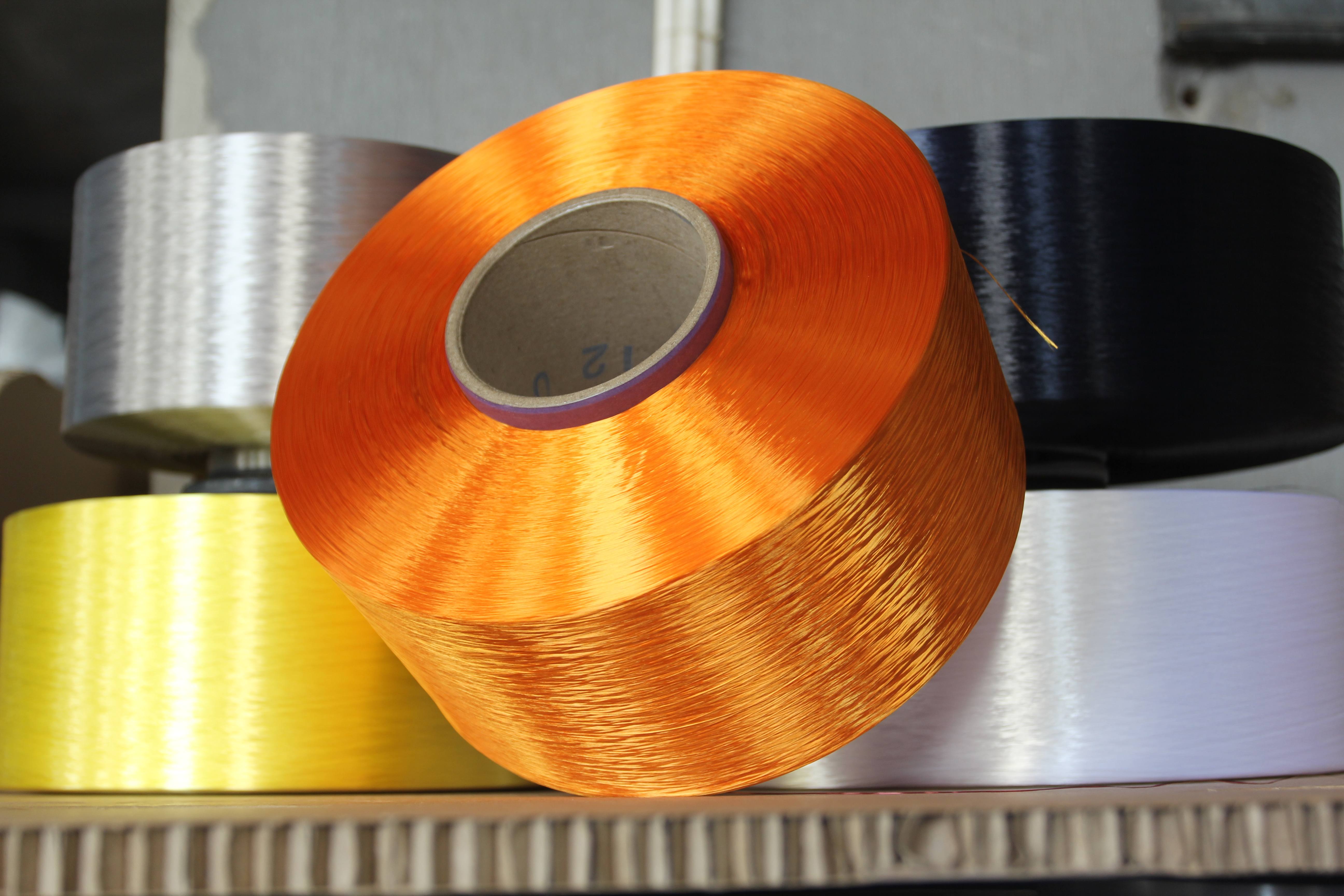
Anyone who has left a 3D print outdoors for a summer knows the disappointment: colors fade, surfaces chalk, and parts turn brittle under constant UV exposure. These UV-stable filaments flip that script. Instead of degrading, they hold their tint and structural integrity even after weeks of direct sun, making them the go-to choice for garden fixtures, automotive prototypes, and anything that lives outside.
The secret lies in specialized stabilizers blended into the polymer base. Unlike standard PLA or ABS, which can yellow or crack after just a few days of harsh light, these materials resist photodegradation at the molecular level. That means no more rushing to paint or coat prints before the first sunny afternoon—just print, install, and let the weather do its worst.
Real-world testing backs it up. From patio brackets to drone landing skids, prints exposed for months show minimal color shift (often under a Delta E of 2) and retain more than 90% of their original tensile strength. If your project has to face the sun, skipping these filaments isn't just a compromise—it's a countdown to replacement.
Nylon 66's Hidden Edge: Molecular Structure That Resists Fatigue
Fatigue failure in thermoplastics almost always begins in the amorphous zones, where loosely packed chains slide and create microvoids under repeated stress. Nylon 66 sidesteps much of this problem through its repeating amide groups, which line up to form a dense, interchain hydrogen-bonded network. These bonds behave like reversible fasteners: they absorb energy by breaking and reforming during each load cycle, so stress dissipates before it can concentrate into cracks.
The symmetrical building blocks of hexamethylene diamine and adipic acid also encourage a tightly packed, highly crystalline structure. That leaves less disordered material where fatigue cracks typically nucleate. Even when a crack does start, the ordered lamellar regions deflect its growth, forcing it along a more tortuous route that slows propagation. The molecular architecture works like a built-in crack arrestor rather than simply resisting deformation.
In practice, parts made from Nylon 66 endure far more flexural cycles than many competing unfilled polymers. Gear teeth, snap-fit hinges, and cable ties all benefit from this fatigue tolerance, which stems from how the chain structure manages repeated loading. The material doesn't just survive bending; it redistributes stress at the molecular level, delaying the onset of failure that usually comes from accumulated damage.
Real-World Loads: From Safety Harnesses to Marine Ropes
Safety harnesses rarely see a slow, steady pull. A fall arrest event can spike the load on webbing and hardware to several kilonewtons within a fraction of a second, and that shock travels through stitching, D-rings, and the wearer's body. Energy absorbers are designed to tear in a controlled way, but their performance depends on how the load enters—off-axis pulls, wet webbing, or a worn edge can change the failure mode. Testing that only hangs a static weight misses the way real falls generate dynamic, off-center forces.
Marine ropes face a different sort of abuse. Mooring lines and towing ropes cycle between high tension and slack as waves and wakes pass, while salt crystals work into the fibers and UV breaks down polymer chains at the surface. Polyester and nylon behave differently here: nylon stretches and recovers well but loses strength when saturated, whereas high-modulus polyethylene offers low stretch but can creep under sustained load. A rope that holds a static test easily may fail in service because of internal abrasion between strands that only shows up after thousands of load cycles.
Understanding real-world loads means testing beyond a single pull-to-break. Drop towers, cyclic load frames, and custom rigs that replicate bend-over-sheave or capstan friction give a much better picture of how gear will hold up. For both harnesses and marine ropes, the gap between laboratory ratings and field failures comes down to the details: how the load is applied, how fast it arrives, and what the material has already been through.
Inside the Production Line: Minimizing Variability in Every Bobbin
On the winding floor, a bobbin that looks identical to its neighbor can hide a completely different tension profile. The first step in minimizing variability is treating every spindle as an independent variable: worn tension discs, slight differences in traverse speed, or even a few millimeters of uneven yarn guide alignment will produce bobbins that unwind differently at the next stage. Operators who log spindle-level adjustments instead of relying on a single line-wide setting start catching drift before it becomes a rejected batch.
Beyond manual checks, the most effective lines use continuous diameter sensing paired with automatic tension compensation. Instead of waiting for a sample inspection to flag a problem, the machine nudges the yarn path whenever the measured diameter deviates from the target curve. This closed-loop approach keeps density within a narrow band from the first layer to the last, which matters more than average specs when the bobbin reaches high-speed warping or knitting.
Finally, maintenance schedules should be tied to actual performance data rather than calendar intervals. A spindle that shows a slightly rising coefficient of variation over three shifts is often headed for a tension spike. Replacing the drive belt or cleaning the waxing unit at that signal takes minutes and prevents hundreds of inconsistent bobbins from mixing into finished lots. The goal is not perfection on a test report, but a line where every bobbin behaves like the one before it.
Tailoring Denier, Twist, and Finish to Your Performance Specs
Denier, twist, and finish are not just spec-sheet jargon—they are the three levers you pull to make a fabric behave exactly how your end use demands. Denier sets the fiber's linear mass, so a lower denier gives you a lighter, softer hand ideal for next-to-skin layers, while a higher denier builds durability and body for packs or upholstery. Twist controls how tightly the fibers bind together: low twist leaves more air between filaments for loft and insulation, while high twist compacts the yarn for abrasion resistance and a crisper drape. Finish then applies the final personality—whether that's a hydrophobic coating for rainwear, a calendered surface for downproofness, or a softener for a peach-skin feel. By tuning each variable against your performance targets, you avoid over-engineering and keep the fabric from feeling generic.
Start with the end-use environment, then work backward. If you need a packcloth that survives rock scrapes, specify a 500-denier nylon with a tight twist and a urethane coating on the back. If you want a wind shirt that stuffs into a chest pocket, drop the denier to 20 or 30, use a false-twist textured yarn for a bit of mechanical stretch, and finish with a durable water repellent that leaves the hand crisp but not stiff. The interplay matters more than any single number: a high-twist yarn in a low-denier filament will feel boardy, while a low-twist yarn in a high denier can pill prematurely. Test small batches with your actual seam and closure system, because a finish that sheets water beautifully might also make the fabric too slippery for a zipper garage to grip.
Vendors often push their standard denier-twist-finish combos, but the best results come from telling them your failure modes, not just your general category. For example, if your product will be washed weekly in hot water, ask for a heat-set twist that resists shrinkage and a finish that survives twenty launderings before losing its hand. If you're after a matte, natural look on a technical shell, request a dull luster nylon with a low-twist false-twist and a micro-porous coating rather than a glossy bright yarn with a standard polyurethane finish. Document your accepted hand feel, drape, and surface friction, then use those as the baseline for future re-orders. This level of specificity turns a generic “performance fabric” into one that feels engineered for exactly what your customer will put it through.
FAQ
It combines high tenacity with excellent resistance to UV degradation, so it holds up under continuous load and prolonged sun exposure without losing strength. We also use a controlled drawing process to keep elongation low and dimensional stability high.
The UV stabilizers are compounded into the polymer before spinning, rather than applied as a surface coating. That means the protection is distributed throughout the filament and remains effective after repeated washing, abrasion, and long outdoor use.
Common applications include outdoor gear, heavy-duty webbing, ropes, automotive textiles, military equipment, and industrial sewing thread. Any product that needs high tensile strength plus resistance to sunlight and weathering is a good fit.
Yes, we can adjust linear density, filament count, twist level, and color according to your requirements. Small-batch trials are available to validate performance before full-scale production.
Nylon 66 generally retains strength better at elevated temperatures and has a higher melting point. Combined with anti-UV additives, it tends to outlast nylon 6 in continuous outdoor applications where heat and sunlight degrade weaker materials.
We test breaking strength, elongation at break, UV aging resistance, and color consistency on every batch. In-house accelerated weathering tests simulate months or years of sun exposure so we can catch lot-to-lot variation early.
Yes, we ship globally with standard or custom packaging. Lead times depend on the specification and quantity, but we usually confirm production schedules within one business day after receiving your details.
Absolutely. We supply technical data sheets with every quotation and can send sample spools for your lab or production trial. If needed, our engineers can discuss how the yarn performs in your specific application before you commit.
Conclusion
High-tenacity nylon 66 filament yarns built for demanding environments manage to stay intact where lesser materials fail. The polymer’s molecular backbone—dense hydrogen bonding across amide groups—gives these filaments a natural resistance to repeated flexing and tensile fatigue, so they hold up under cyclic loads that quickly snap standard nylons. Add UV stabilizers directly into the extrusion process, and the yarn shrugs off prolonged sun exposure without significant loss of strength or surface degradation. This combination is why you find the same yarn family in fall-protection harnesses, marine mooring lines, and industrial lifting slings: each application demands a thread that keeps its integrity when tension spikes, weather turns harsh, and inspections are infrequent.
On the production side, real consistency comes from controlling every variable from polymer drying to winding tension. A manufacturer focused on this niche doesn’t just ship bobbins; it documents denier drift, twist variation, and finish pickup so that each lot behaves like the last. For customers specifying a 420-denier twisted yarn with a low-friction finish for webbing or a heavier 1680-denier construction for rope jackets, those parameters aren’t afterthoughts—they’re part of the design. Tailoring denier, twist level, and surface coating to the final use means the yarn arriving at your plant behaves predictably on high-speed braiders and looms. That level of control reduces waste, speeds up qualification, and ultimately gives engineers one less failure point to worry about in load-bearing textile structures.
Contact Us
Contact Person: CONNIE
Email: [email protected]
Tel/WhatsApp: 86-0512-53671634
Website: https://www.lida-yarn.com/