
Dropper Bottles Factory: What to Look for in a Reliable Manufacturing Partner
2026-10-25
Most brands obsess over what's inside the bottle, but rarely ask who actually made it—until a batch arrives with faulty droppers or cracked glass. That's when a 'cheap' factory gets expensive. If you're sourcing dropper bottles, the real challenge isn't finding a supplier; it's finding one that won't let you down when your order volume doubles or your spec changes overnight. At Imagine Craft Packaging, we've learned what separates a consistent manufacturing partner from a one-hit wonder. Here's what to look for before you commit.
Dropper Bottle Materials That Actually Match Your Formula
Glass dropper bottles aren't one-size-fits-all. If your formula contains essential oils or high levels of certain solvents, untreated soda-lime glass can shed ions over time and alter the scent or color. Borosilicate glass, sometimes called Type I, holds up far better with aggressive actives like retinoids or acids. Amber or cobalt finishes block the light wavelengths that trigger degradation in photosensitive ingredients, which matters more than many formulators expect.
On the plastic side, the rubber bulb and cap liner often cause more trouble than the bottle itself. Natural rubber or low-grade silicone can swell, crack, or release compounds into oil-based serums. Nitrile and platinum-cured silicone are safer bets for oil-heavy or anhydrous products. For the bottle body, PET is fine for short-term water-based formulas, while HDPE is often preferred for thicker balms and lotions because it resists stress cracking.
Match the neck finish and dropper tip to the viscosity too. A thin, water-like toner wants a controlled orifice and a glass pipette with a narrow tip, while a heavier facial oil may need a wider bore or a dropper with a tamper-evident collar. Testing the full package with your actual formula, not just a water placeholder, is the only way to catch swelling, clouding, or leakage before you commit to a large run.
Mold Precision That Keeps Every Drop Where It Belongs
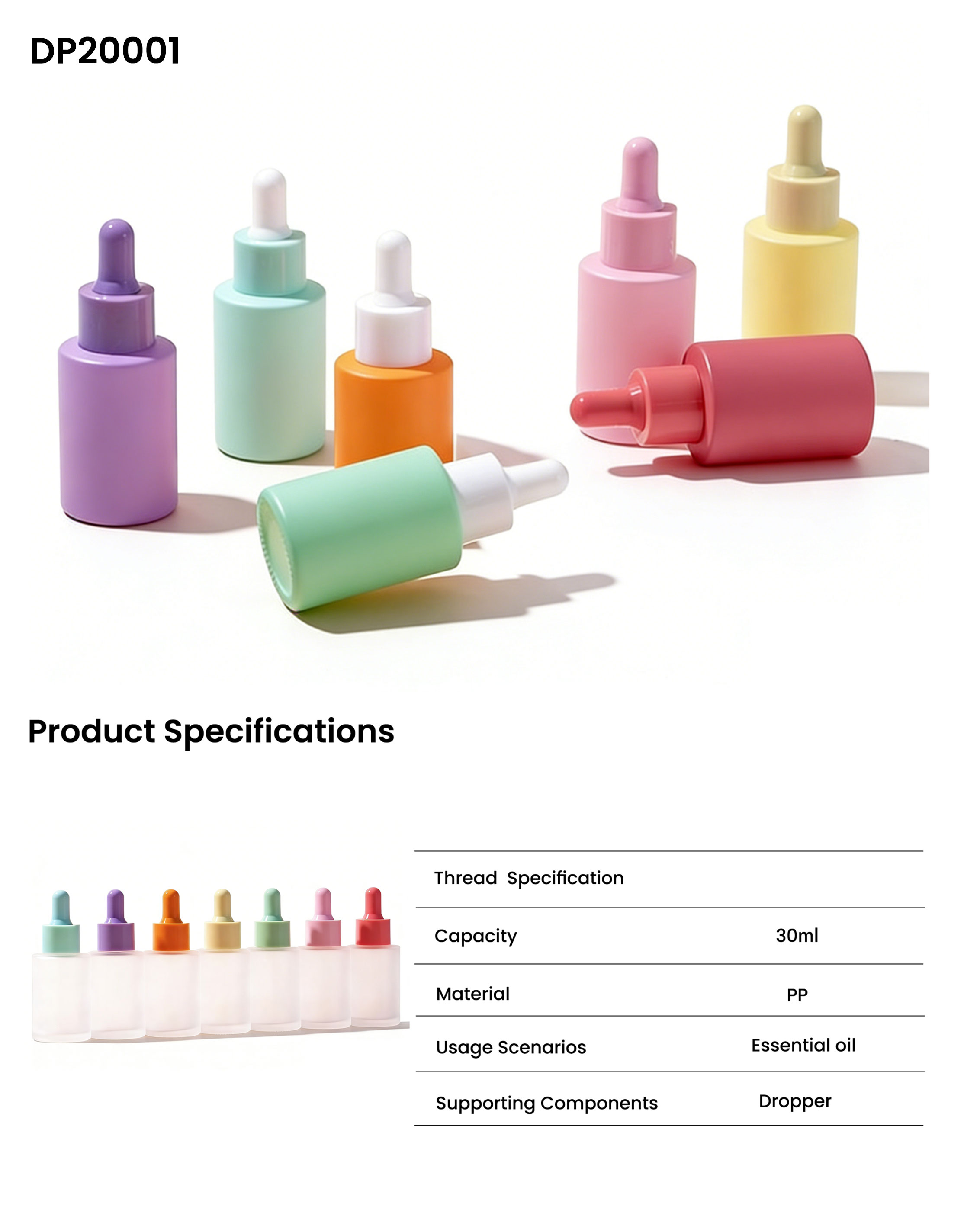
The quiet difference between a product that merely works and one that lasts for years often comes down to a fraction of a millimeter. When a mold is cut with exacting tolerances, the resulting parts fit together so tightly that liquids, gases, and even fine particulates have no unintended path to escape. This isn't about over-engineering for its own sake—it's about respecting the real-world conditions a component will face, from thermal expansion to pressure spikes, and ensuring the seal remains true long after the first cycle.
Achieving that level of precision means refusing to accept "close enough" at every stage of the process. It starts with tool steels chosen for dimensional stability, followed by machining strategies that minimize residual stress. Then comes the patient work of surface finishing and polishing, where even a tiny burr or micro-crack can become a leak point under load. The result is a cavity and core that mate with such consistency that every molded piece repeats the same internal geometry, shot after shot, without drift.
Customers rarely see the inside of a mold, but they feel the consequence in daily use: a cap that doesn't weep, a valve that holds its seat, a connector that stays dry. That reliability isn't a lucky accident. It's the quiet proof that someone cared enough to chase microns, because every drop that stays where it belongs is one less call to customer service, one less warranty claim, and one more reason to trust the product in your hand.
Custom Closures and Liners Without the Back-and-Forth
Getting a closure that actually fits your container shouldn’t feel like a long-distance negotiation. We start with your exact specs—neck finish, liner material, torque requirements, even the way your product expands in summer heat—and move straight into prototyping. No vague email chains, no third-party forwarding. You approve digital proofs, then physical samples land at your door ready for line trials.
If a liner needs tweaking, the revision loop is short. We keep your original parameters on file, so a change to induction seal thickness or child-resistant features doesn’t restart the whole conversation. Most brands go from first inquiry to production-ready closures in under three weeks, often with fewer than two rounds of samples.
Cleanroom Production Proof You Won’t Have to Ask Twice For
Most cleanroom providers wait until a client demands evidence before sharing any production data. That's not how we work. The moment your project enters our facility, you receive a live dashboard link with particle counts, pressure differentials, and environmental logs updated every fifteen minutes. No request needed—the proof just shows up in your inbox.
Beyond the real-time feed, we bundle a complete verification package with every batch. ISO 14644-1 compliance certificates, gowning procedure checklists signed by staff, surface swab results, and even time-stamped video of the filling line. Each file is named, organized, and delivered before you think to ask. If a single data point drifts outside spec, an alert hits your phone before our shift supervisor finishes reading it.
Clients often tell us they've never seen this level of openness in a cleanroom partner. That's because we treat proof not as a favor, but as part of the product itself. You shouldn't have to chase down documentation. You should be drowning in it—organized, current, and impossible to ignore.
Order Quantities That Scale From Samples to Full Production
Start with a handful of units to validate your design and gather real feedback, then move into a pilot batch without retooling or switching suppliers. The same production line handles both, so what you learn at ten pieces holds true at ten thousand.
You are not locked into a fixed minimum that forces excess inventory before demand is proven. Adjust quantities between runs as your market responds, and keep cash flowing into the next iteration rather than sitting in a warehouse.
This flexibility works for startups refining a first product and established teams testing a new market. The transition from sample to full production feels less like a leap and more like turning up a dial.
A Factory That Communicates Like a Partner, Not a Vendor
When you call our factory, you won't get a scripted sales pitch or a clumsy game of telephone. You'll reach someone who already knows your last order, your production cadence, and the name of your dog if you've mentioned it. We keep our lines direct and our answers concrete: spec changes, material lead times, or a sudden spike in demand get a same-day response with options, not excuses.
That partnership mindset shows up in how we share information. Instead of hiding behind formal quotes and weekly status reports, we send rough sketches mid-brainstorm, flag a potential finish issue before it becomes a defect, and tell you honestly when a cheaper material will do the job just as well. It's the kind of back-and-forth you'd expect from a co-worker who happens to run a production floor.
Over time, this changes the relationship. You stop bracing for negotiation and start treating our team as an extension of yours—someone who will push back when a design choice threatens durability, or call you at 9 PM because a container got bumped and we already found an alternative route. No jargon, no gatekeeping, just the same goal: getting your product built right, without the friction of a typical buyer-seller dynamic.
FAQ
Ask for their incoming material records and batch test data. A solid plant will show you AQL levels, cap leak tests, and pipette dimensional checks. If they won't share those, that tells you enough.
Look for a partner that works with glass, PET, and HDPE, and can explain the trade-offs. For essential oils or serums, they should know why certain rubber bulbs or child-resistant caps need specific durometer ratings. Having an in-house material lab is a bonus.
Not always. Some factories advertise low minimums but then charge high tooling or per-unit prices. Better to confirm whether the minimum includes custom printing, color matching, and assembly. A partner that's upfront about setup fees can save you from surprises later.
Depending on your market, you may need ISO 15378 for pharma packaging, FDA-compliant resins, or REACH for EU sales. Ask for current certificates, not just logos pasted in a quote. If they've passed a recent third-party audit, that's even stronger.
Request a design-for-manufacturing review before quoting. A capable factory will point out issues like neck finish compatibility, pipette length tolerances, or closure torque specs. If they just say yes to everything, they probably haven't looked closely.
Typically four to eight weeks after artwork approval, depending on tooling and printing complexity. Beware of factories promising two weeks for custom molds—they often cut corners on cooling or polishing. Ask for a production schedule with milestones, not just a final date.
Critical. You need a direct line to a project engineer, not just a sales rep who forwards messages. Test their responsiveness by asking technical questions during sampling. A partner that answers within a day with clear, specific info will save you weeks of back-and-forth.
Conclusion
A dependable dropper bottle factory starts by asking what's inside the bottle, not just what size you need. Glass, PET, PP, and LDPE all behave differently with essential oils, serums, acids, or solvents; a partner that understands chemical compatibility prevents cracking, leaching, or discoloration months down the line. Mold precision is equally telling - well-maintained, tightly toleranced molds produce threads and tips that seal without drips or sticking. When you need a distinctive cap, a child-resistant closure, or a liner that won't react with your formula, the factory should be able to suggest options from existing tooling rather than forcing you through weeks of back-and-forth. And if they make medical-grade claims, ask for batch-specific documentation from their cleanroom operation. You shouldn't have to chase a certificate every time.
Beyond technical specs, the way a factory handles scale and conversation reveals a lot. Some shops are set up for small sample runs, others only for large production; the right partner transitions from pilot batches to full production without changing molds or raising the per-unit price unexpectedly. Pay attention to how they talk to you during quoting and sampling. A factory that asks about your filling method, shelf life requirements, and distribution environment is functioning like a partner, not just taking an order. They flag potential issues with dropper bulb materials or orifice sizes before they become problems. In practice, a reliable partner is one where you don't have to explain the same detail twice, where lead times are given honestly, and where any hiccup is communicated with a solution attached. That combination of material know-how, mold discipline, cleanroom transparency, and genuine communication is what separates a factory you hope gets it right from one you trust to get it right.
Contact Us
Contact Person: Sunnie
Email: [email protected]
Tel/WhatsApp: +8615818596517
Website: https://www.imagine-craft.com/