

Calcium Chloride 94% Granules Manufacturer: Key Quality Factors and Sourcing Tips
2026-10-24
Sourcing calcium chloride 94% granules isn't just about price per ton—it's about purity, granule consistency, and a supplier's process control. Whether you're formulating de-icing products, dust control, or industrial brines, subtle quality gaps can quietly erode performance. Shouguang Golden Chemical has built its name on closing those gaps, but what should buyers actually verify before committing? This guide unpacks the key quality factors and practical sourcing tips to help you avoid costly trial and error.
When 94% Isn't 94%: Checking Purity Claims
The sticker on the bottle says 94% pure, but that number can hide a lot. Most suppliers measure purity in a way that flatters the product—maybe they test only one batch, or use a method that ignores related impurities. The real question is what the other 6% contains, because even a small fraction of the wrong compound can ruin an experiment or make a supplement unsafe.
Before trusting a purity claim, pull the certificate of analysis and look for the test method. HPLC and GC are common, but they don't catch everything. Ask for a third-party lab result that lists known impurities and residual solvents. If a vendor hesitates to share that data, treat the 94% as a marketing number, not a fact.
Independent verification matters more than the printed percentage. A batch that fails one lab's test might pass another's, which is why reputable suppliers publish round-robin results. When precision matters, don't buy the headline number—buy the data behind it.
Granule Size Determines How Fast It Dissolves—Not Just a Number
A granule's diameter gives you a starting point, but the real story unfolds at the solid-liquid boundary. Surface area scales inversely with particle size, yet powders with the same median diameter can dissolve at wildly different rates. Clumping, wetting behavior, and the roughness of each granule alter how much solid is truly exposed to the solvent.
Take sugar as an everyday example. Coarse crystals sink and dissolve steadily, while confectioners' sugar vanishes almost instantly in cold water. But push the grind too fine and the powder may float, trapping air and creating a gel-like shield. The measured particle size has barely changed, yet the dissolution profile flips.
That is why formulators obsess over particle size distribution rather than a single average. A bimodal mix can dissolve faster than a uniform fine powder because larger particles create channels for liquid to penetrate. Matching granule size to the solvent's viscosity and agitation turns a simple number into a practical lever for release rates.
How Moisture Creeps In Before Shipping
Factories often become humid long before a container door ever closes. Raw materials sit in open-air storage, absorbing dampness from morning dew or a sudden rain shower. Production floors without proper climate control trap that same moisture in fibers, cardboard, and wood pallets. Even after a product looks dry on the outside, its inner layers can hold water vapor that only becomes noticeable weeks later inside a sealed trailer.
Packing lines add another layer of risk. Goods are sealed into plastic or shrink-wrap while still warm from processing, locking residual heat and sweat inside the package. Corrugated boxes stacked near loading bays breathe in exhaust fumes and damp outdoor air every time a dock door opens. A short rain splash during hand-loading, or condensation from a forklift moving between cold storage and a warm yard, is often enough to start the slow creep of moisture through an entire pallet.
The final hours before departure matter most. Containers parked overnight in a humid port collect condensation on their steel walls. When dry goods are loaded and the doors are sealed, that trapped humidity has nowhere to escape as temperatures rise during transit. The result is a microclimate inside the box—quietly soaking packaging, labels, and sometimes the product itself long before it reaches its destination.
Batch-to-Batch Drift: The Quiet Killer of Consistency
Most teams only notice a problem after the spec has already been missed. Batch-to-batch drift works quietly: each run looks acceptable on its own, but compared to the batch from three months ago, the shift is obvious. Raw material lots change, equipment wears, and ambient humidity creeps up or down. Because these changes happen slowly, they rarely trigger a single out-of-control alarm. Instead, the process center moves a little at a time until the tails of the distribution start producing defects.
The real danger is that drift mimics stability within a short window. A control chart built on the last ten batches may show nothing unusual because the variation within that window is small. But step back and plot the last fifty batches, and a steady downward or upward trend appears. Operators often compensate manually—adjusting a setpoint here, tweaking a feed rate there—which masks the drift and makes it even harder to detect later.
Catching this requires looking at data over longer time horizons than most dashboards default to. Compare rolling averages across weeks, not just consecutive runs. Track raw material lot numbers against output quality even when nothing seems wrong. And make supplier or feedstock changes a trigger for re-baselining the process, because that is exactly when a new drift pattern tends to start.
Packaging That Keeps Granules Free-Flowing Until Use
Most granule problems start long before the first scoop. Clumping, caking, and uneven measuring happen when humidity sneaks past a weak seal. This package stops that at the source with a fused foil liner and a cap that seats against a raised collar, not just a flat rim. The liner blocks ambient moisture while the collar creates a secondary friction fit, so you get a clean pop on the first open and a dependable snap every time after.
The pouring path was shaped to avoid crushing or wedging the granules. Instead of a narrow neck that forces shaking, the wide opening lets a scoop move freely, and the curved spout channels the product without backflow. Inside the cap, a small desiccant disk pulls away any residual moisture that enters during quick use, quietly keeping every granule separate between sessions.
That is why this container doesn't rely on a thin pouch or a single zip seal. The base layer resists punctures and shelf wear, the cap's tamper ring breaks away cleanly, and the whole unit stays square on a pantry or lab shelf. Leave it in a humid room, open it daily, or store it half-empty; the contents remain loose, pourable, and accurate to measure right up to the last scoop. No sieving, no tapping, no wasted product.
Contract Clauses That Prevent Sourcing Headaches
When drafting a sourcing agreement, the most valuable clauses often go unnoticed until something goes wrong. A tightly written specification of work, including deliverables, acceptance criteria, and performance metrics, removes the guesswork that typically leads to disputes. Pair that with an explicit change control process, and you avoid the classic scenario where scope quietly expands while the budget stays frozen. These clauses may seem like boilerplate, but they are the difference between a partnership that runs on rails and one that derails over every invoice.
Intellectual property and data handling are another minefield if left vague. Clearly defining who owns pre-existing materials, newly developed code, and any derivative works prevents the kind of headaches that surface months later during an audit or a buyout. Similarly, a robust confidentiality and data protection clause—one that actually reflects your operational reality, not a copy-paste template—keeps both parties accountable without creating a compliance burden that nobody can meet.
Finally, don't underestimate the power of a well-designed exit and dispute resolution framework. Clauses that outline step-by-step escalation (internal review, mediation, then arbitration or court) give both sides a predictable path before tensions boil over. Adding a reasonable termination for convenience, with clear transition assistance obligations, means you are never trapped in a failing relationship. These provisions rarely get the spotlight, but they often save more time and money than any renegotiation ever will.
FAQ
Look beyond the headline purity figure. Request a full certificate of analysis that includes moisture content, insoluble matter, magnesium and alkali chloride levels, and sulfate content. Reliable material usually shows moisture below 1%, insolubles under 0.2%, and tight control on magnesium chloride, which affects hygroscopic behavior and could cause caking in storage.
Granule size determines dissolution rate and spreadability. For deicing, a slightly larger and harder granule tends to melt ice longer and resist being blown away during application. For dust control on gravel roads, smaller granules or a well-graded mix penetrate the surface faster. Ask the manufacturer for a sieve analysis rather than a vague 'average size' claim.
Most commercial material comes either from natural brine purification or as a by-product of soda ash manufacturing via the Solvay process. Natural brine often has lower heavy metal content, while synthetic routes can offer more consistent purity but may carry trace organic residues. Always ask whether the manufacturer uses food-grade or technical-grade raw inputs, as this affects suitability for water treatment or food processing.
Sodium chloride and magnesium chloride are the usual troublemakers. Excess sodium chloride lowers effective calcium content and can create uneven melting performance. High magnesium chloride attracts moisture aggressively, leading to clumping, sticky handling equipment, and inaccurate dosing in industrial mixing. Iron and aluminum residues are also a concern for brine clarity in oilfield or food applications.
Ask for three consecutive production batch reports from the last quarter, not just a single sample. Compare the standard deviation of assay results: if purity swings between 92.5% and 95.5%, that signals poor process control. A trustworthy manufacturer will also offer third-party inspection at loading, such as SGS or Intertek, without hesitation.
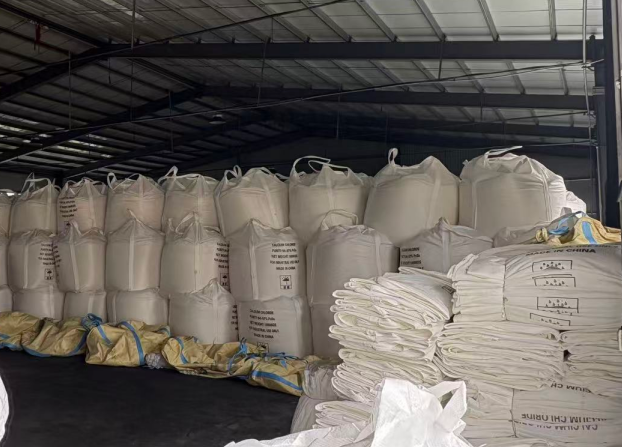
Calcium chloride granules absorb moisture aggressively, so look for laminated polypropylene bags with an inner polyethylene liner, or moisture-barrier bulk bags with sealed seams. The manufacturer should recommend storage in a dry, covered area and ideally supply palletized shrink-wrapped loads. If they ship in single-layer woven bags or leave pallets exposed, expect caking problems before the product reaches your site.
Request the exact production location and whether it has ISO 9001 certification, the lead time for a 20-foot container, and how they handle rejected lots. Also ask for a reference from a customer using the product in a similar application to yours. Finally, confirm the pallet weight, bag marking, and whether they can provide custom labeling without delaying shipment. These details reveal whether the supplier handles logistics as carefully as chemistry.
Conclusion
Buying calcium chloride 94% granules sounds straightforward until you realize that a label reading 94% doesn't always match what's inside the bag. Some suppliers round up, blend lower-grade material, or ignore moisture content when calculating purity. Ask for a full certificate of analysis that breaks down actual CaCl₂ content, impurities like magnesium and alkali chlorides, and moisture. Granule size matters just as much: finer granules dissolve faster but clump more easily, while larger ones may sit undissolved in cold water. Know your application and specify a mesh range rather than accepting whatever the manufacturer ships.
Moisture is the enemy before the product even reaches you—poor drying or leaky bags lead to caked, rock-hard material that won't flow. Check the packaging: heavy-duty moisture-barrier liners, sealed valve bags, or drums with desiccant if storage is humid. Batch-to-batch drift quietly undermines your process; one delivery works perfectly, the next behaves differently. Demand lot-specific test data and track performance over time. Finally, write contract clauses that define acceptable purity tolerance, particle size distribution, moisture limit, and rejection rights. A manufacturer willing to sign those terms—and back them with third-party lab results—saves you far more than a lower price ever will.
Contact Us
Contact Person: Tom Cui
Email: [email protected]
Tel/WhatsApp: +8618663670626
Website: https://www.jinjigoldenchem.com