
Best Rubber Conveyor Belt Vendor from China for Durable and Cost-Effective Industrial Belting
2026-10-06
A snapped belt at 2 a.m. doesn’t care about your supplier’s brochure. What matters is whether the replacement can handle the same load, speed, and abrasion without sending your maintenance costs through the roof. That’s the reality behind choosing a rubber conveyor belt vendor from China—where price can be tempting, but long-term durability is what actually keeps a plant running. XAN has built its name in that space by focusing on the unglamorous details: rubber compound consistency, reinforced carcass design, and predictable lead times. In the sections ahead, we dig into what makes these belts a cost-effective option when you’re tired of frequent changeouts.
The Materials Behind Long-Lasting Rubber Conveyor Belts
Rubber conveyor belts endure relentless abrasion, heavy loads, and harsh environments, so the choice of raw materials directly dictates their service life. Natural rubber offers high tensile strength and excellent elasticity, making it suitable for general-purpose belts that need to absorb impact. However, for belts exposed to oil, heat, or chemicals, synthetic rubbers like nitrile or neoprene outperform natural rubber with superior resistance to degradation. Blending different rubber types allows manufacturers to balance cost, flexibility, and durability based on the specific operating conditions.
The reinforcement layer—often called the carcass—is equally critical. Polyester and nylon fabrics are common because they provide high strength-to-weight ratios and resist moisture, while steel cords deliver unmatched tensile strength for long-distance or high-tension applications. The adhesion between rubber and reinforcement is achieved through special bonding agents, usually isocyanate-based or resorcinol-formaldehyde latex systems. A weak bond leads to ply separation and premature belt failure, so material compatibility is tested rigorously before production.
Finally, protective compounds are added to the rubber cover to enhance longevity. Anti-abrasion fillers like carbon black improve cut and tear resistance, while antioxidants and antiozonants slow down cracking from UV exposure and oxidation. In cold climates, plasticizers keep the belt flexible at low temperatures, whereas flame-retardant additives are mandatory for underground mining. Selecting the right combination of these materials—not just the rubber grade—determines whether a conveyor belt lasts years or fails within months.
Why Chinese Manufacturing Keeps Industrial Belting Costs Down
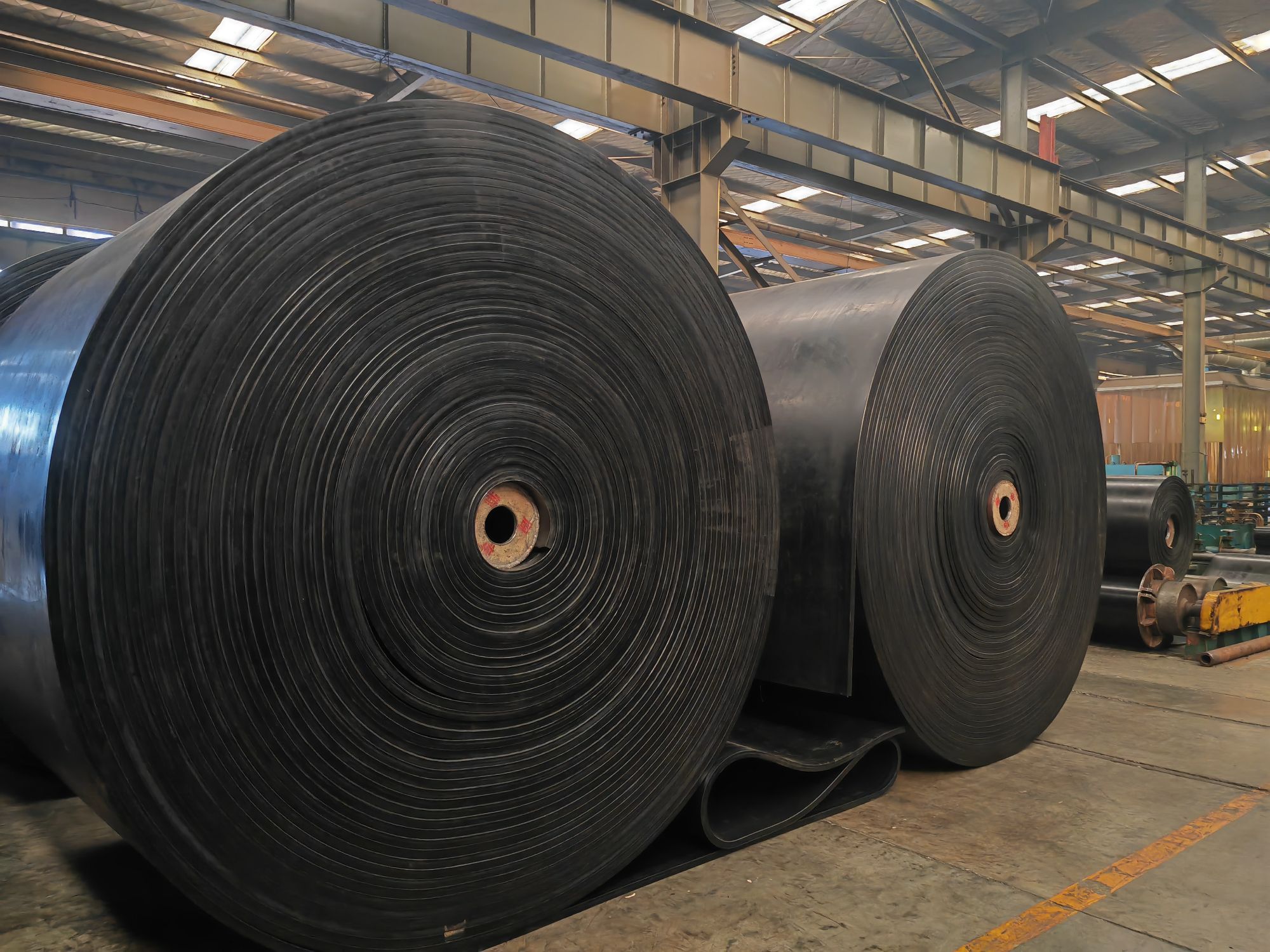
The cost advantage rarely comes from a single big lever. In most industrial belts, the raw rubber, polyester fabric, and steel cord account for nearly two-thirds of the final price. Chinese plants buy these inputs from nearby suppliers in the same province, sometimes from the same industrial park, cutting freight and middleman markups to almost nothing. When a factory can call a fabric mill and have a custom-width roll delivered within hours instead of waiting weeks for an import, the savings show up directly in the per-meter price.
Another overlooked factor is how quickly the workforce adapts to mixed orders. Instead of running a single belt specification for days, many Chinese manufacturers switch lines several times per shift. That flexibility would normally carry high labor costs, but a deep pool of experienced operators and maintenance crews keeps changeover time short. Lower downtime means the plant spreads fixed costs across more saleable meters, so even smaller custom runs stay affordable.
Equipment also plays a quieter role. Rather than importing fully automated European lines at full price, many mid-sized factories retrofit domestic presses, calenders, and curing units with sensors and controls bought separately. The result is not always the newest machine on the floor, but it is reliable enough for standard DIN, RMA, or ISO grades. This capital discipline keeps depreciation low, and those lower overheads are reflected in export quotes without sacrificing the certifications buyers actually require.
Custom Belt Specifications That Prevent Premature Wear
Off-the-shelf belts rarely match the exact wear patterns of a specific operation, which is why custom specifications matter more than most maintenance teams assume. Selecting a carcass with a tightly controlled elongation rate, for instance, prevents the constant stretch-and-recover cycle that breaks down internal fibers long before the cover shows visible damage. Pairing that with a cover compound formulated around the actual dust, oil, or temperature swings on your line stops abrasive particles from embedding in the surface and gradually sawing through the tension members.
Another overlooked variable is edge construction. Standard cut edges fray under lateral misalignment, while a custom sealed edge with a slightly thicker cross-section resists the scrub against side guides and flanges. Specifying a narrower width tolerance also keeps the belt tracking true instead of wandering into frame contact points that shave material from the shoulders. When combined with precise pulley crown matching, these dimensional details shift the failure point from the belt itself to the expected maintenance interval.
Environmental sealing usually gets treated as an afterthought, but custom belts can integrate static-dissipative layers or moisture-blocking films directly into the build. Rather than coating a finished belt and hoping the treatment survives repeated flexing, embedding these properties in the rubber or polyurethane blend means conductivity and water resistance remain consistent through millions of bending cycles. That approach works especially well in washdown areas where chemical exposure and high-pressure spray quickly degrade standard belts' top covers and adhesives.
Hidden Flaws to Watch for When Choosing a Conveyor Belt Supplier
Most buyers zero in on tensile strength and price per meter, but that overlooks how a belt behaves after a few thousand hours under load. Ask for a sample of the actual production batch, not a lab sheet from three years ago. One red flag is when the supplier can't explain how their cover compound holds up to cutting, gouging, or oil exposure in your specific environment. If they only repeat the datasheet numbers back to you, they probably haven't tested the belt under conditions that match your line.
Watch how the supplier handles mixed orders and rush replacements. A company that keeps only standard widths in a regional warehouse may struggle when you need a non-standard length or a specific splice pattern mid-shift. Ask how many days of spool stock they maintain for your belt class, and whether they can ship a cut-to-length order without waiting for a container from an overseas plant. The answer tells you more than any quoted lead time.
The last hidden flaw is weak field support. A low-cost quote often quietly drops the technical visits, splice supervision, and failure analysis that keep a conveyor running. Before signing, ask for a recent case where they helped a customer fix premature wear, and what data they track after installation. If the sales team goes quiet after the order, the belt price was never the real cost.
How the Right Belt Tension and Splice Design Cut Downtime
Proper belt tension isn't just about avoiding slippage—it's a direct lever on bearing life and energy draw. Many maintenance teams overtighten, thinking tighter means safer, but that accelerates wear on pulleys and shafts. On the other hand, a belt that's too loose can wander, cause tracking issues, and eventually tear at the edges. Getting the tension dialed in with a frequency meter or deflection test keeps the load evenly distributed and prevents the kind of sudden failures that halt a line for hours.
Splice design is another overlooked factor. A poorly executed splice—whether mechanical or vulcanized—creates a weak point that can catch on scrapers or idlers, leading to premature tearing. Using the right splice pattern and ensuring the ends are cut square and clean makes the joint nearly as strong as the parent belt. Combined with proper tension, a well-designed splice minimizes shock loads and extends the interval between scheduled replacements, which means less unplanned downtime.
Comparing Real Quotes: Getting Durable Belts at Fair Prices
A low sticker price rarely tells you much about a belt’s real value. When you start comparing quotes, look past the headline number and check what the belt is actually made from. Full-grain leather costs more than bonded leather, and a solid brass buckle won’t flake or snap the way cheap zinc alloy does. Ask each seller for the leather thickness, the type of edge finishing, and whether the hardware is plated or solid. That way you can judge durability instead of just guessing from a photo.
Getting genuine quotes takes a little effort but pays off. Contact a few small leather goods workshops, not just big retailers, and request an itemized breakdown: materials, labor, shipping, and any warranty terms. Be wary of vague words like “premium” or “genuine leather,” because those often hide lower-grade split hides. A seller who openly states the tannery or leather grade is usually more trustworthy. And don’t forget to ask about return policies—if a belt stretches or cracks within a few months, you want a clear path to replacement or refund.
Once you have three or four real quotes, compare them on cost per year rather than just upfront price. A belt priced at $45 that lasts nine months costs you $60 per year. A $75 belt that holds up for five years costs only $15 per year. That kind of math makes fair pricing obvious. Also check recent customer reviews for mentions of stretching, cracking, or loose stitching—those are the real indicators of durability. Choose the quote that balances honest materials, clear warranty, and a price that reflects how long the belt will actually last.
FAQ
Focus on the tensile strength, number of plies, and the quality of the rubber cover. For heavy-duty jobs like mining or quarrying, you want a belt with at least 400 N/mm tensile strength and abrasion-resistant covers, often rated DIN Y or DIN W. Also check the adhesion between layers—poor bonding leads to early delamination.
Ask for their production certifications, such as ISO 9001 or ISO 14890, and request samples for independent lab testing. A trustworthy vendor will be transparent about raw material sources—natural rubber from Thailand or Vietnam, synthetic rubber like SBR or neoprene—and won't hesitate to share previous client references or factory audit reports.
Yes, if you buy directly from a manufacturer rather than a trading company. Labor and raw material costs in China are lower, but a good vendor maintains strict quality control. The key is to compare total landed cost, including shipping and import duties, not just the unit price. Many buyers save 20–40% without sacrificing performance.
Absolutely. Most established Chinese vendors offer custom width, length, cover thickness, ply count, and even special compounds like heat-resistant or oil-resistant rubber. Provide your working conditions—temperature range, material type, incline angle—and they can recommend a belt structure. Just make sure to confirm the MOQ and lead time for custom orders.
The most frequent complaints are premature cover wear, ply separation, and uneven splice strength. To avoid these, specify the exact cover grade and request a certificate of analysis for each batch. Also, don't rely only on visual inspection—ask for tensile, elongation, and abrasion test reports from a third-party lab if possible.
For standard sizes, expect 15–25 days after deposit confirmation. Custom belts take around 30–45 days depending on complexity. Shipping to major ports in North America or Europe adds another 15–30 days by sea. A good vendor will give you a clear production schedule and shipping updates, not vague promises.
The better ones do. They can help with belt selection, installation guidance, and troubleshooting issues like tracking problems or premature wear. Some even offer on-site training for your maintenance team or video calls for real-time support. Make sure after-sales support is written into the purchase agreement.
Conclusion
The best rubber conveyor belt vendors from China don't just sell a product—they solve a materials problem. By combining high-grade natural and synthetic rubber compounds with reinforced fabric or steel cord layers, these manufacturers produce belts that resist abrasion, tearing, and heat aging far longer than standard alternatives. That durability starts with raw material selection, but it's also shaped by how a supplier handles custom specifications: precise cover thickness, edge sealing, and splice design all prevent the premature wear that plague poorly matched belts. Working directly with Chinese factories—rather than through multiple intermediaries—also cuts costs substantially, without forcing buyers to sacrifice performance.
But cost savings only matter if the belt survives daily stress. Hidden flaws like inconsistent ply adhesion, recycled filler material, or rushed vulcanization can turn a cheap quote into a costly shutdown. The right vendor will openly share test data, tensile ratings, and failure analysis, and will help you optimize belt tension and splice geometry for your specific load and speed. Comparing real quotes line by line—not just final price—exposes where corners are cut and where value is real. That's how you get durable industrial belting at a fair price, not just a lower one.
Contact Us
Contact Person: Anna Lu
Email: [email protected]
Tel/WhatsApp: 8618561668850
Website: https://www.x-conveyor.com